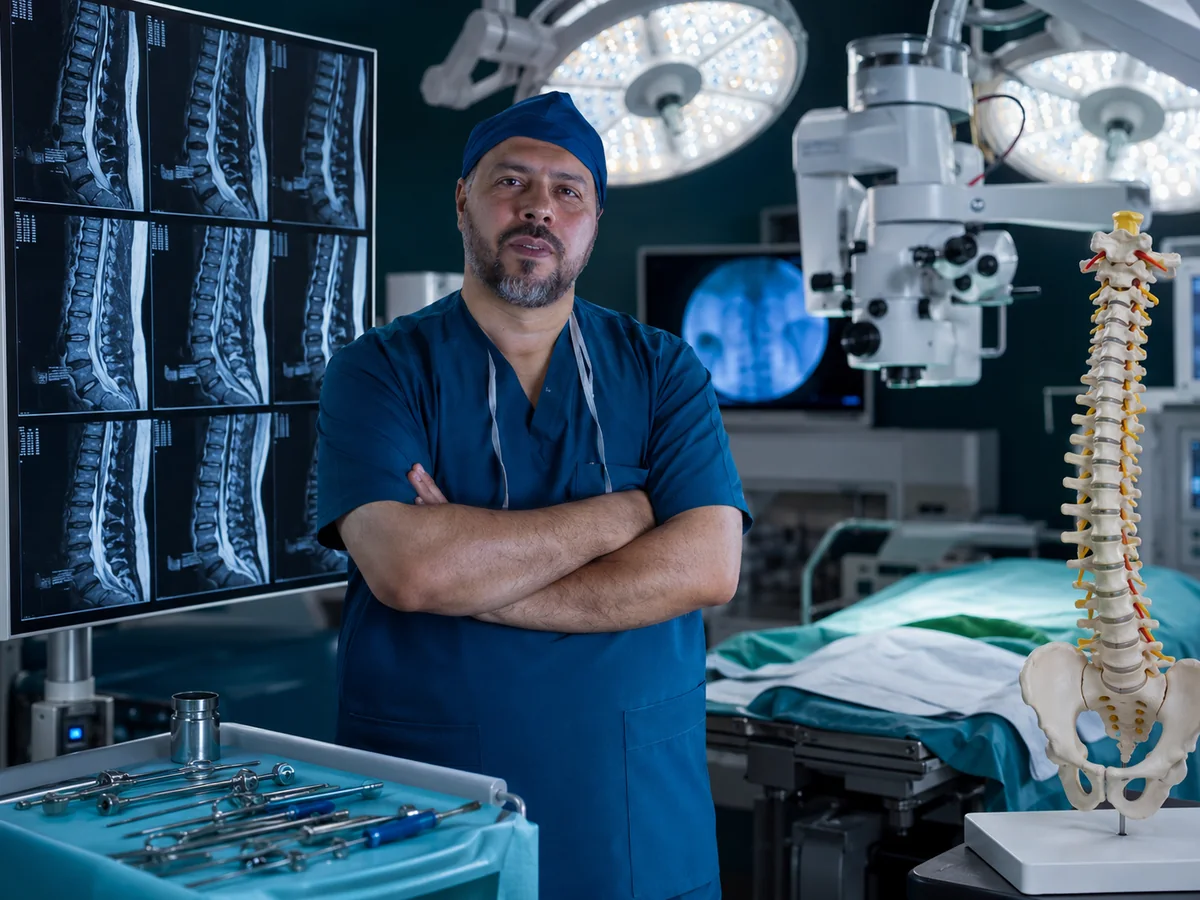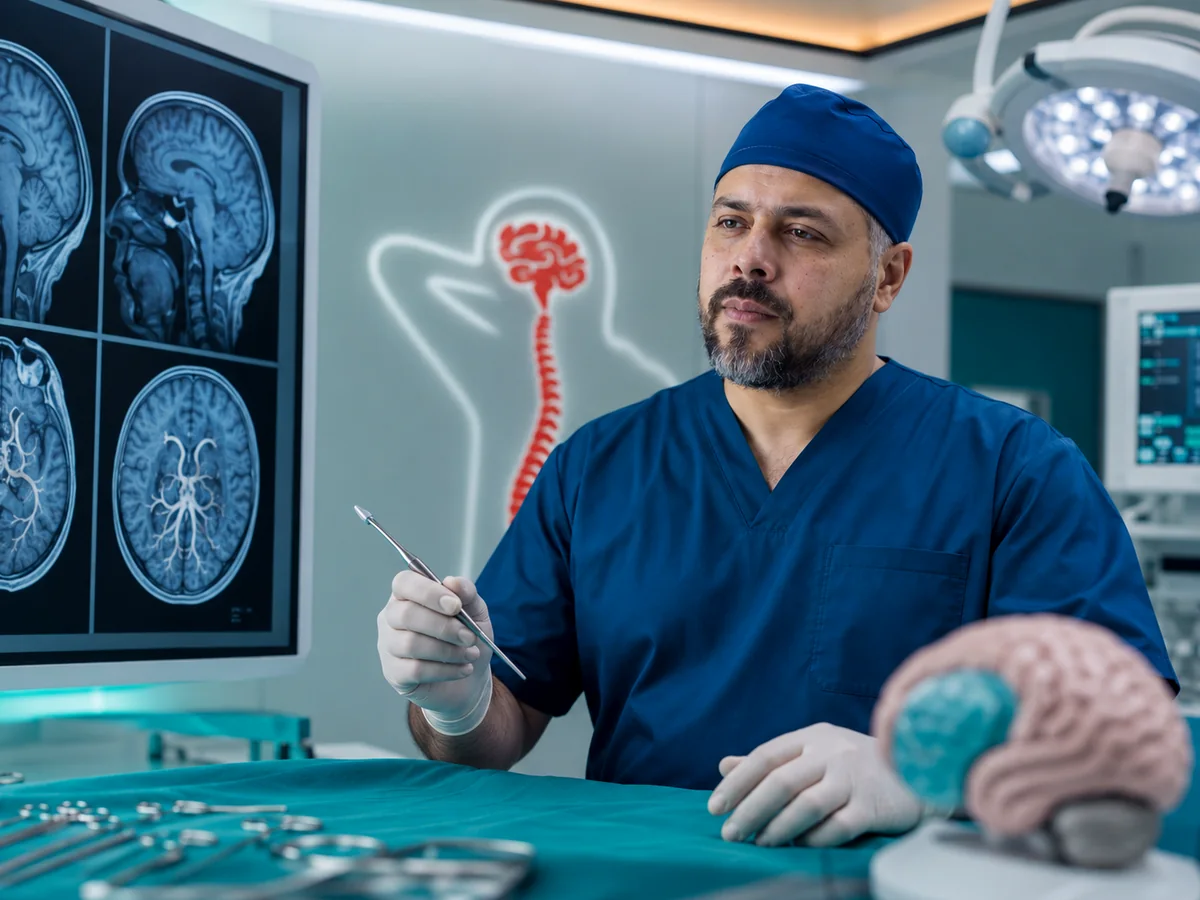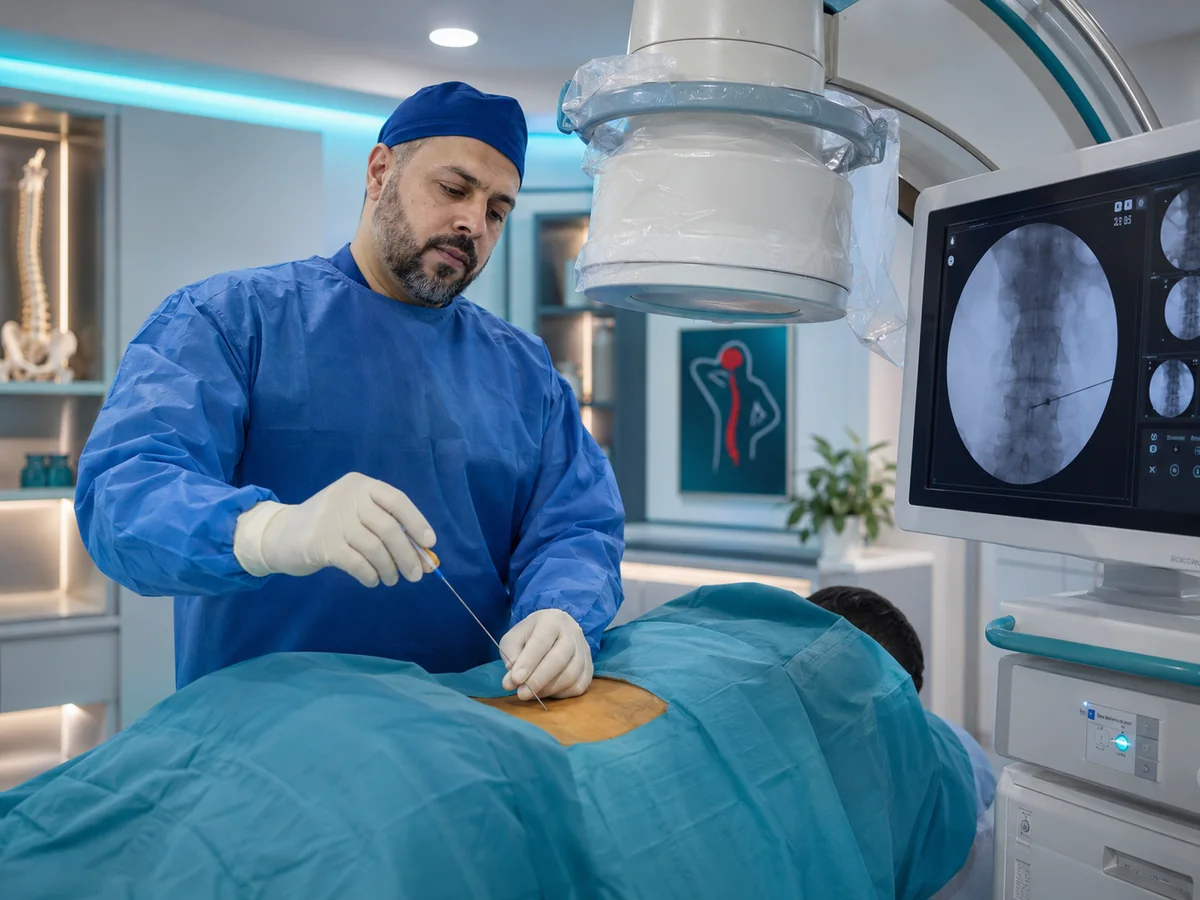
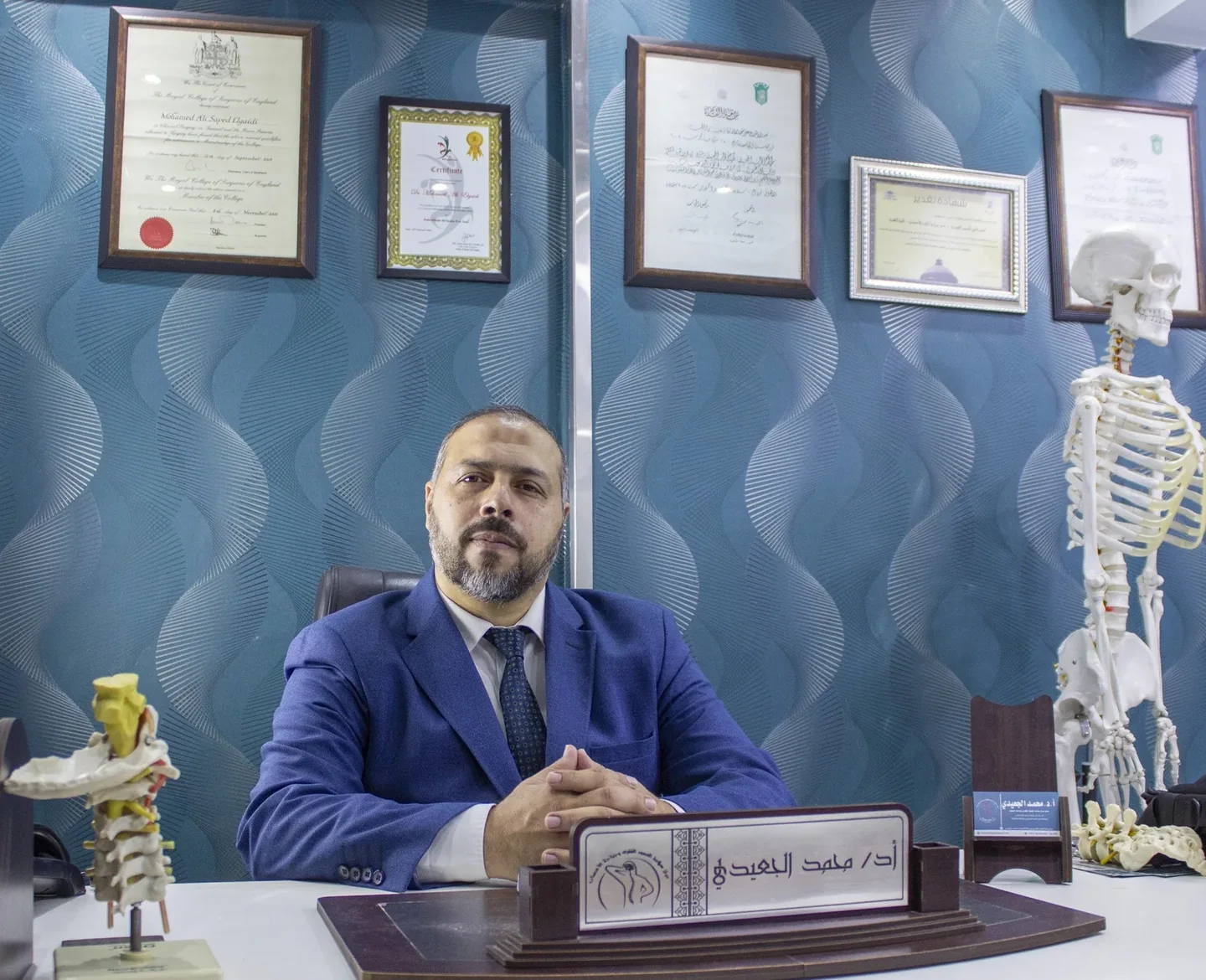
Prof. Mohamed El-Gaidi is a neurosurgeon and Professor of Neurosurgery and Spine Surgery who trained at Kasr Al Ainy, earned his doctorate at Cairo University and became a full professor in 2023. Today he combines academic work with patient care at his clinic in Dokki, Cairo, treating spine, brain and peripheral nerve conditions as well as chronic back and neck pain.
Below you will find his credentials with dates, his doctoral research explained in plain language, the conditions he treats, how he discusses treatment with patients, and links to his published work.
Training at Kasr Al Ainy
Mohamed El-Gaidi graduated from Kasr Al Ainy Faculty of Medicine, Cairo University, in 2000 with distinction and honors. He completed his internship at the Kasr Al Ainy hospitals, went on to residency in neurosurgery, and then worked as an assistant lecturer in the same department.
Those years teach a neurosurgeon things the operating room alone does not: how to connect a patient's story with the neurological examination, how to read MRI and CT images first-hand, and when observation is enough versus when intervention is needed. A large university hospital exposes a young surgeon to everything from head and spine trauma to brain tumors and hydrocephalus in children.
Academic career at a glance
- 2000
MB BCh, Medicine and Surgery
Kasr Al Ainy Faculty of Medicine, Cairo University, with distinction and honors, followed by internship, neurosurgery residency and assistant lecturer years at Kasr Al Ainy.
- 2009
MD in Neurosurgery
Cairo University, with a thesis on three-dimensional correction of adolescent scoliosis.
- 2016
Assistant Professor of Neurosurgery
Promoted in December 2016.
- 2023
Professor of Neurosurgery
Full professorship awarded in March 2023.
Doctoral thesis: adolescent scoliosis
Prof. El-Gaidi's MD thesis was titled "Three-dimensional correction of adolescent scoliosis". Scoliosis is a sideways curve of the spine; its most common form appears during the growth spurt, roughly between ages 10 and 18, usually without an identifiable cause.
Why "three-dimensional"?
On a front-view X-ray, scoliosis looks like a simple sideways bend. In reality the vertebrae tilt and rotate at the same time, and the normal front-to-back profile of the spine changes too. That is why some teenagers show a rib or shoulder-blade hump when they bend forward, even more than a visible tilt. Good surgical correction addresses the rotation as well as the curve, instead of just straightening a line on the X-ray.
What parents may notice
- One shoulder higher than the other.
- One shoulder blade sticking out.
- An uneven waistline.
- A hump on the back when bending forward.
The curve is measured on standing X-rays using the Cobb angle, and treatment depends on its size, the child's age and how much growth remains. Small curves are monitored, moderate curves in a growing child may need a brace, and large or progressing curves may need corrective surgery with fixation. This interest in spinal deformity carries through to his current work in spine surgery, including scoliosis and kyphosis correction.
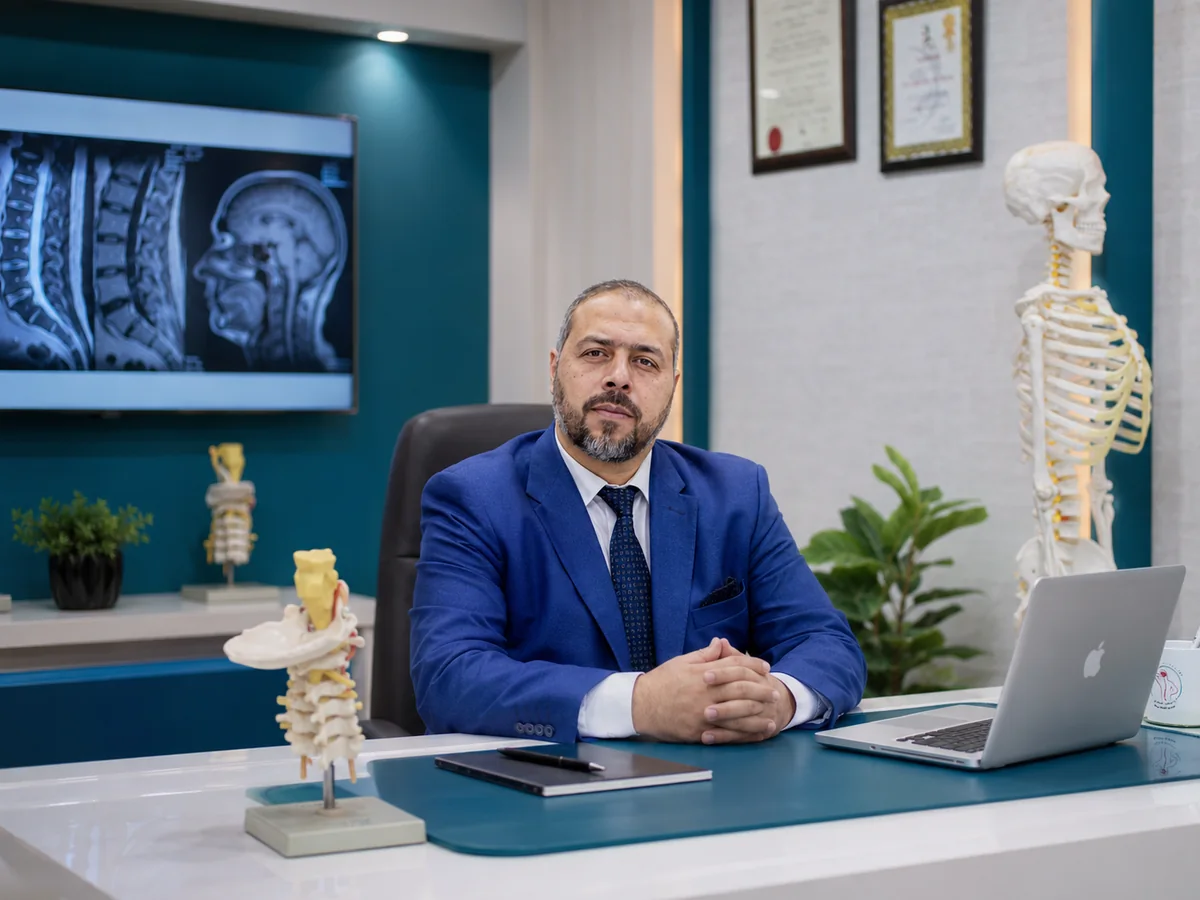
From Assistant Professor to Professor of Neurosurgery
Prof. El-Gaidi became Assistant Professor of Neurosurgery in December 2016 and full Professor of Neurosurgery in March 2023. Promotion to these ranks at Egyptian universities is based on an evaluation of published research and academic work, and it comes with teaching medical students and training neurosurgery residents.
For a patient, the title means your surgeon keeps up with current evidence as part of the job, discusses complex cases with colleagues and knows both surgical and non-surgical options. What matters most in the consultation, though, is that you understand your diagnosis and choices, which is covered in the section on decision-making below.
What Prof. El-Gaidi treats
His practice covers eight areas of neurosurgery and spine surgery, each with its own page:
Pain management without surgery
Epidural, nerve root and facet injections, and radiofrequency ablation for back, neck and knee pain.
Spine surgery
Endoscopic discectomy, decompression for spinal stenosis, spinal fusion and scoliosis correction.
Brain tumor and skull base surgery
Brain and skull base tumors, endoscopic transnasal pituitary surgery, head injury and brain bleeds.
Hydrocephalus and neuroendoscopy
Shunts and endoscopic third ventriculostomy for adults and children.
Functional neurosurgery
Tremor, movement disorders, spasticity and selected chronic pain conditions.
Peripheral nerve surgery
Carpal tunnel, ulnar nerve entrapment and nerve injuries.
Pediatric neurosurgery
Hydrocephalus, spina bifida and tethered spinal cord in children.
Cerebrovascular surgery
Brain aneurysms and arteriovenous malformations of the brain and spinal cord.
Most of what he sees day to day is back and neck pain spreading into the limbs, so there are dedicated guides to herniated disc treatment and sciatica treatment, plus an overview of all neurosurgery and spine services.
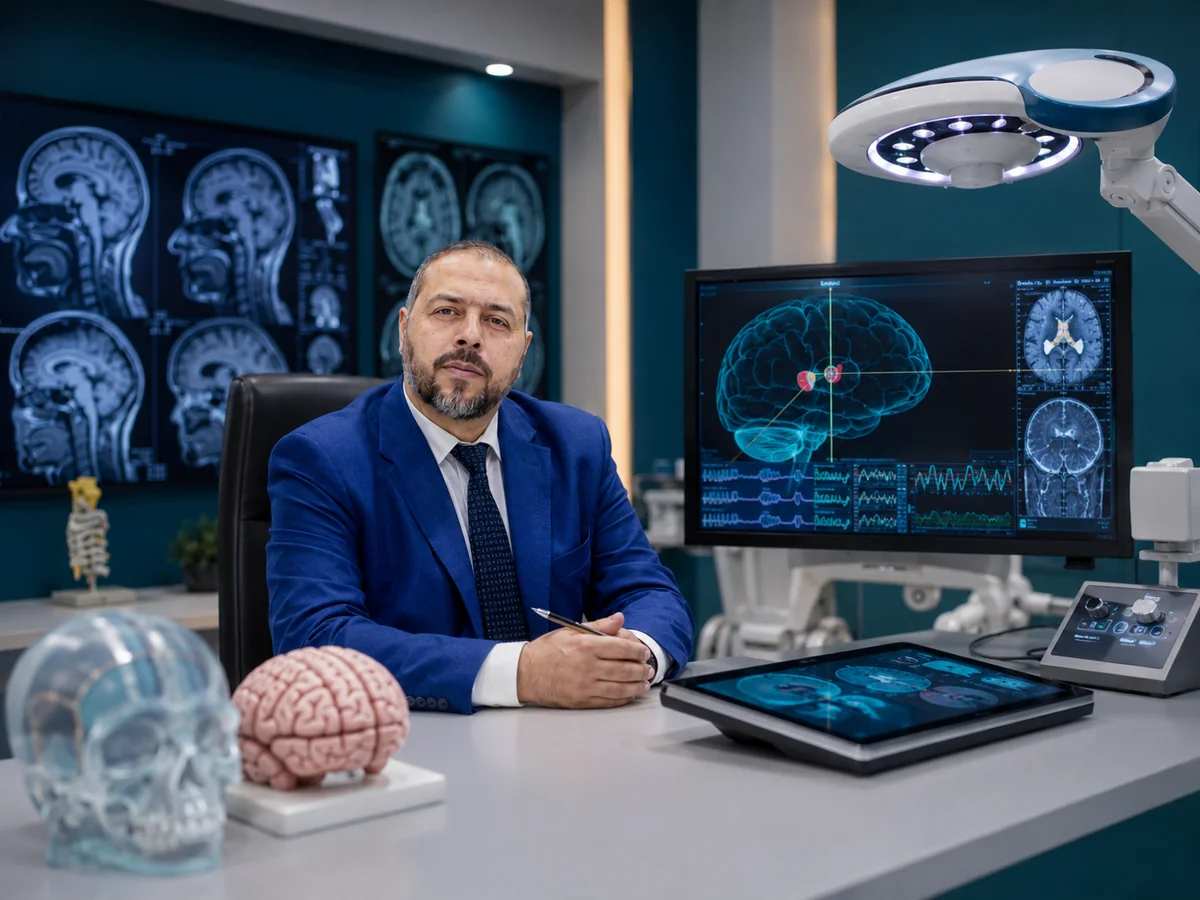
How he discusses treatment with you
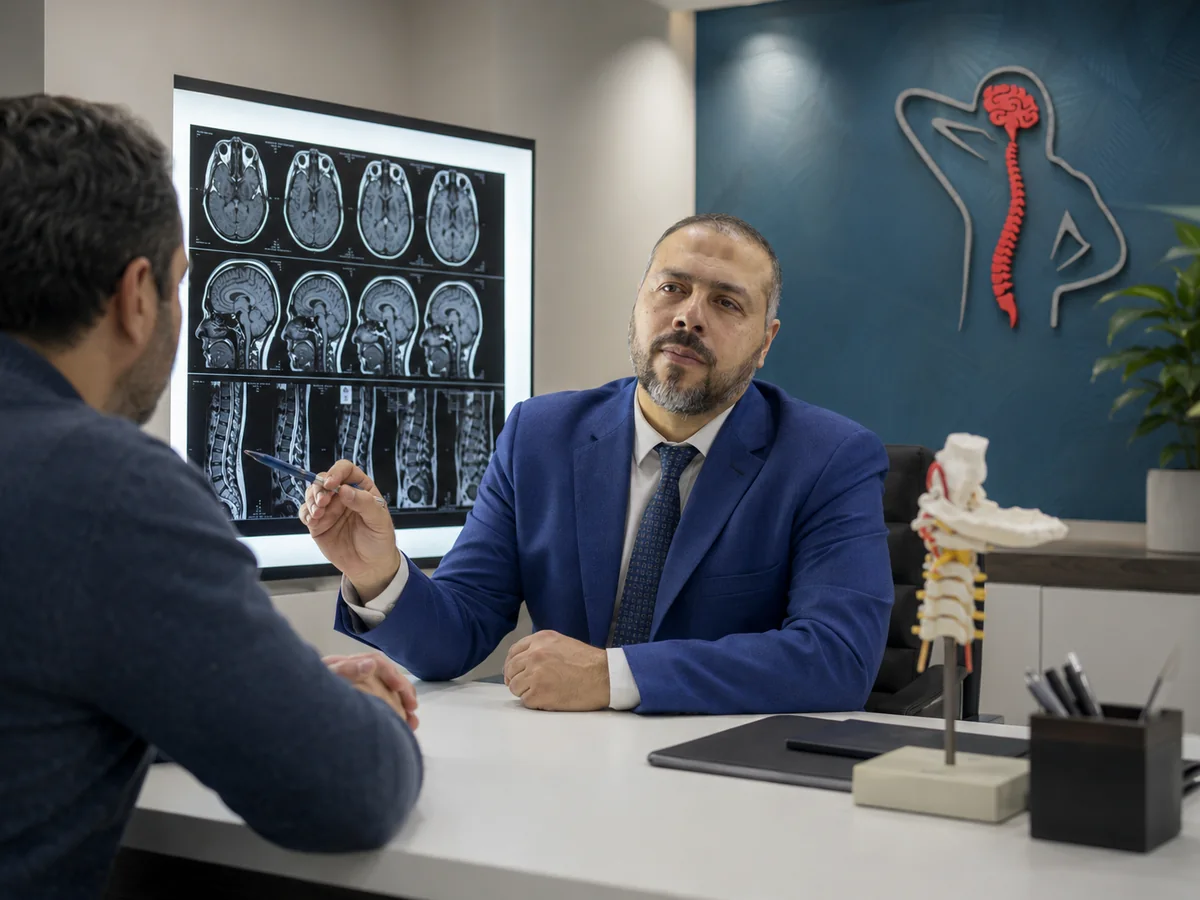
Many patients who see a neurosurgeon worry they will leave with a surgery date. At Prof. El-Gaidi's clinic the visit follows a fixed order, so you understand the decision before it is made:
Your history
When the symptom started, where it spreads, what makes it worse and what you have tried.
Neurological exam
Muscle strength, sensation, reflexes and walking, tailored to your complaint.
The images themselves
Your MRI or CT is reviewed directly, not just the report, and matched against the exam.
Clear options
Medication and physiotherapy, guided injections, or surgery, with the risks and recovery time of each.
A disc bulge on an MRI does not automatically mean surgery. The decision rests on your symptoms and examination together.
When the case allows, treatment starts with the least invasive options. When there are signs that call for surgery, such as increasing leg weakness or loss of bladder control, he explains why and which approach fits: endoscopic, microscopic or fusion.
Research and academic profiles
Prof. El-Gaidi's published work is available from the original sources:
- Google Scholar profile : publications and citation counts.
- ResearchGate profile : papers, abstracts and research activity.
- PubMed search : papers indexed by the US National Library of Medicine.
Research studies look at groups of patients; your own treatment plan is based on your examination and your scans.
Where Prof. El-Gaidi sees patients
He consults at the Spine Health & Neurosurgery Center, 114 El-Tahrir St., Dokki, Giza, next to Dokki Metro station, 4th floor. It is easy to reach from Mohandessin, Agouza and downtown Cairo. Hours are Saturday to Thursday 11 am to 11 pm, and Friday 1 to 5 pm.