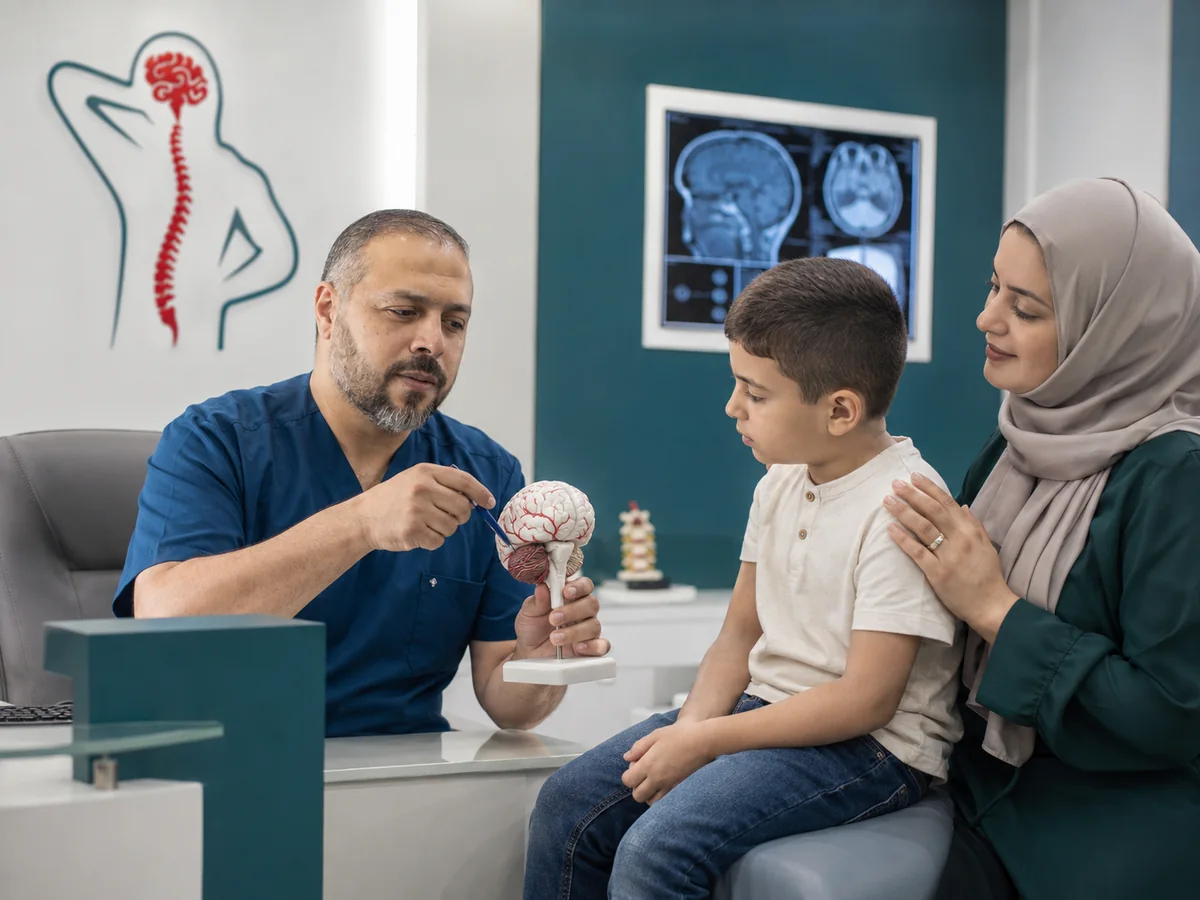
When your pediatrician says your child needs to see a pediatric neurosurgeon, it usually means a surgical specialist should assess a condition that may need treatment, such as fast head growth and hydrocephalus, spina bifida, tethered spinal cord, or a brain or spinal tumor. At the consultation you will learn exactly what is happening, whether your child needs surgery now or careful follow-up, and why.
Pediatric neurosurgery differs from adult surgery. The brain and spine are still growing, blood volume is smaller, and timing decisions are tied to growth and development. Prof. Mohamed El-Gaidi works closely with pediatricians, anaesthetists and rehabilitation specialists, and explains the plan to the family step by step at his clinic in Dokki, Cairo.
Head growth and hydrocephalus in infants
Measuring head circumference at every pediatric visit is simple and important. The trend on the growth chart matters more than any single number; a head that crosses percentile lines over a few weeks needs an explanation. The most common cause is hydrocephalus, a build-up of cerebrospinal fluid inside the brain's ventricles due to blockage or poor absorption.
- Head circumference growing faster than expected for age.
- A tense or bulging fontanelle while the baby is calm, and widened skull sutures.
- Eyes turned downward ('sunsetting'), repeated vomiting, unusual drowsiness or irritability.
- Delayed motor milestones such as head control or sitting.
While the fontanelle is open, a cranial ultrasound shows ventricle size with no radiation or anaesthesia; an MRI may follow to find the cause. Treatment is either a shunt that drains fluid to the abdomen or, for suitable obstructive cases, an endoscopic third ventriculostomy. Full details are on our hydrocephalus treatment page.
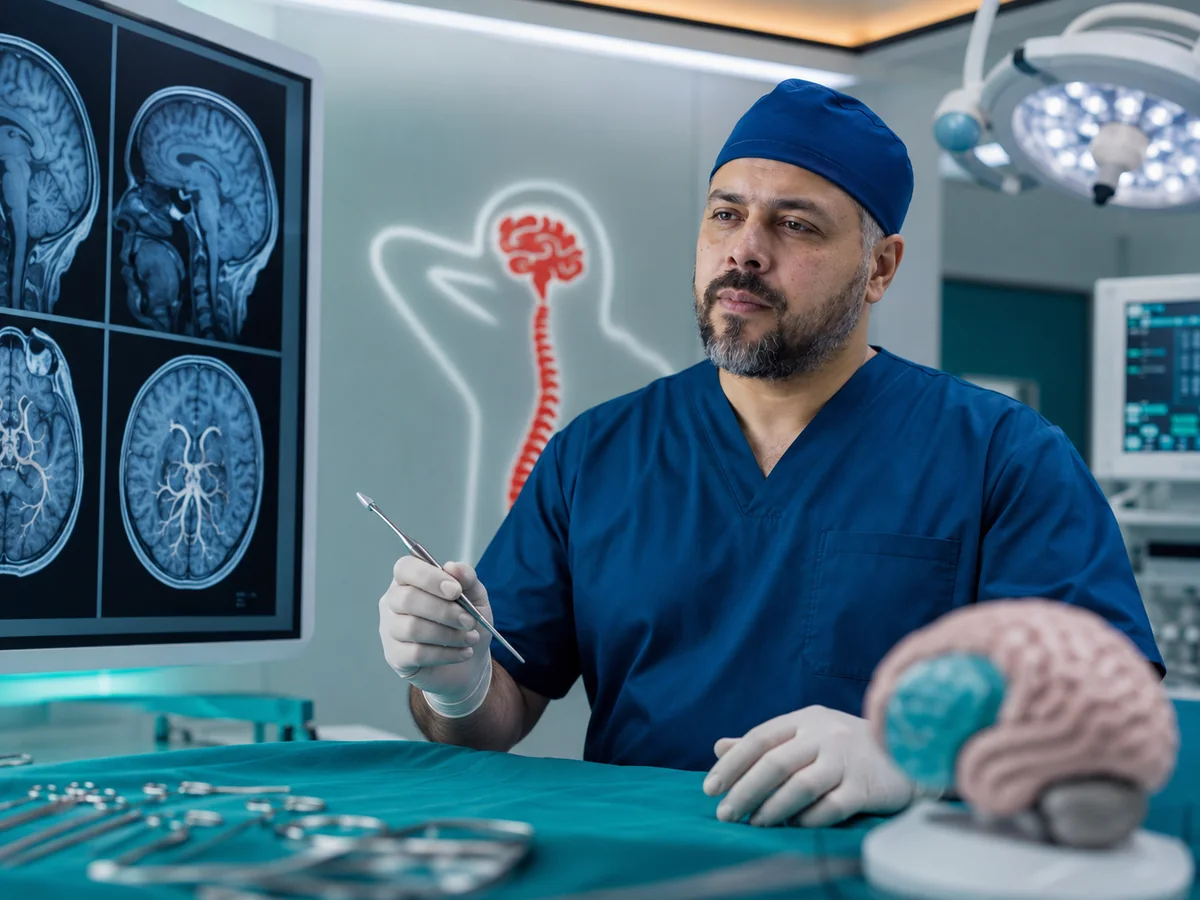
Spina bifida and myelomeningocele
Spina bifida is a birth defect that arises in the first weeks of pregnancy when the spine does not close fully around the spinal cord. It may be detected on antenatal ultrasound, and severity varies widely.
Open myelomeningocele
A sac on the back exposing the spinal cord and nerves. It needs early surgical closure, usually within the first two days of life, to protect the nerves and prevent infection.
Skin-covered forms
Such as spinal lipomas attached to the cord. Usually not urgent, but they need assessment and planning because they often cause tethered cord.
A baby born with open spina bifida needs close head monitoring after surgery, as many develop hydrocephalus and may need a shunt. Bladder, kidney, bone and foot follow-up with the relevant specialists is also part of the plan, and we help you organise it so nothing is missed.
Tethered spinal cord: early signs that are easy to miss
Normally the spinal cord moves freely inside the canal as a child grows. When it is anchored at the bottom by fatty tissue, a thickened filum or scar from previous surgery, it is stretched with each growth spurt and symptoms appear gradually.
- A skin marker over the lower back: a hair tuft, a deep dimple above the buttock crease, a fatty lump or a birthmark.
- Change in walking or frequent tripping, or one foot differing in size or shape.
- Back or leg pain that increases with activity.
- Return of wetting after toilet training, recurrent urinary infections or severe constipation.
- Rapidly progressing curvature of the spine.
Tethered cord release aims to relieve the tension, protect existing function and prevent decline. Timing matters: surgery preserves what the child has far better than it restores function lost long ago, so do not delay assessment of a suspicious lower-back skin marker.
Brain and spinal tumors in children
Childhood brain tumors differ from adult tumors in type and location, and many arise in the cerebellum and brainstem at the back of the head. Some are benign and can be removed completely; others need further treatment after surgery with the pediatric oncology team.
Signs that need prompt assessment: recurrent morning headaches with vomiting, new unsteadiness when walking, a sudden squint or poor vision, a first seizure, arm or leg weakness, or loss of skills the child had already mastered.
Spinal and spinal cord tumors are less common and may start with night-time back pain in a young child, leg weakness or a change in bladder control. Persistent back pain in a young child is not normal and needs checking. Surgery aims to remove the tumor safely while protecting neurological function, and sometimes to obtain tissue for diagnosis. For more on brain surgery in general see brain tumor surgery.
Congenital malformations and spasticity in children
Congenital malformations of the nervous system
These include Chiari malformation (part of the cerebellum descending into the opening at the base of the skull), encephalocele (brain or its coverings protruding through a skull defect) and dermal sinus tracts connected to the spinal canal. Some are found before birth; others show up later with symptoms such as cough headache, swallowing difficulty or limb weakness. Not every case needs surgery, and careful follow-up is part of treatment.
Spasticity in children
Children with cerebral palsy may have leg spasticity that limits walking or sitting despite physiotherapy and medication. In selected cases, selective dorsal rhizotomy or a baclofen pump can help; the choice depends on the child's motor ability and how widespread the spasticity is. Details are on our functional neurosurgery page.
Before considering any surgery for spasticity, we review with the rehabilitation physician what physiotherapy, splints and medication have achieved, and agree a realistic goal for the child: better walking, easier sitting and daily care, or less pain and fewer deformities with growth. A clear goal from the start makes it easier for the family and the team to judge the result.
How the family is involved, from first visit to follow-up
You know your child better than anyone, and your observations are a key part of the diagnosis. So we start by listening, explain the plan in plain language, and leave time for your questions before any decision.
Listening and examination
We go through pregnancy, birth and development, examine your child calmly, and review head measurements and scans with you.
Explaining the diagnosis
We show what the scans reveal using drawings or models, and what it means for your child now and later.
Shared decision
We discuss options, timing and risks, and agree whether surgery is needed now or follow-up is enough.
Team follow-up
We coordinate with your pediatrician, anaesthesia and rehab teams, and set follow-up dates and warning signs.
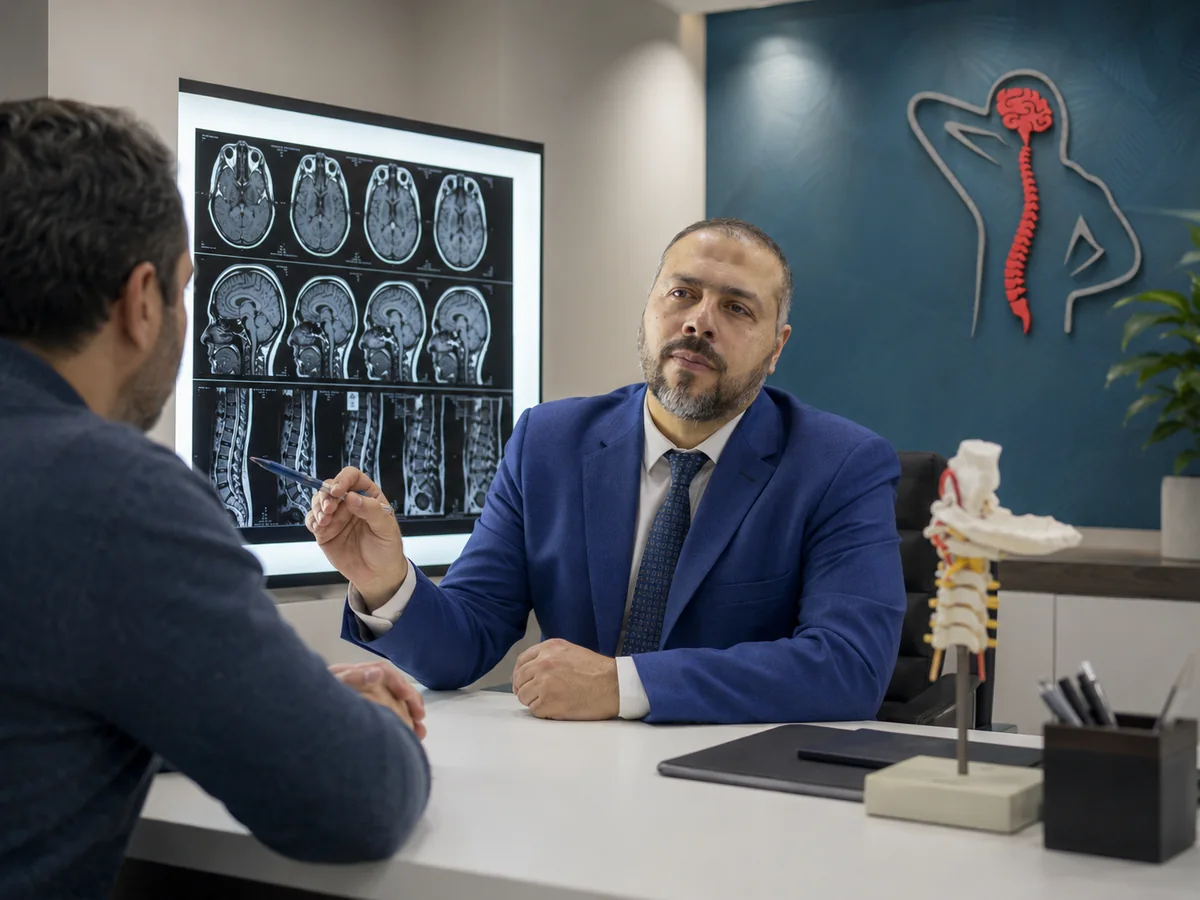
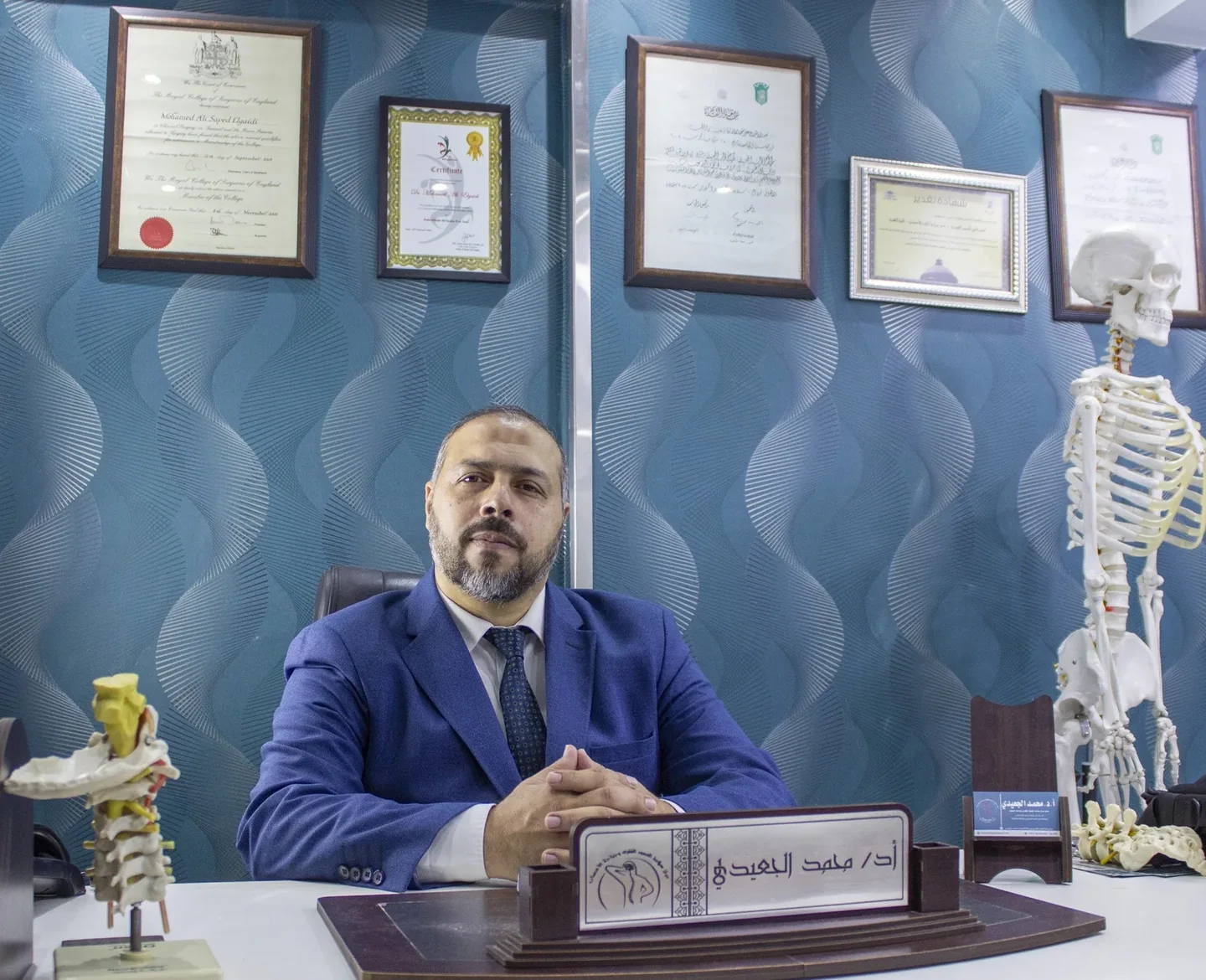
Prof. El-Gaidi is Professor of Neurosurgery at Cairo University and a graduate of Kasr Al Ainy. His practice includes pediatric neurosurgery alongside spine surgery and brain surgery. See his full profile.
After your child's surgery: hospital, home and follow-up
What worries parents most is what happens after the operation. In the first days your child is closely monitored for alertness, movement, the wound and fluids, and a parent can usually stay nearby, because your presence calms the child and helps the team notice early changes. Hospital stay depends on the type of surgery, and you will know the estimate before admission.
At discharge you will receive written instructions on wound care, bathing, medication and permitted activity. Children often bounce back faster than adults, but keeping dressing and follow-up appointments is essential.
Follow-up that grows with your child
Some conditions end with one operation and short follow-up; others need years of follow-up, such as children with a shunt, a released tethered cord or a removed tumor. At each visit we review:
- Head circumference, growth and motor and cognitive development compared with previous visits.
- Shunt function and any symptoms that could suggest blockage.
- Walking, leg strength, bladder and bowel control and spinal alignment.
- Periodic scans when needed, and school and behavioural progress.
If you notice a change between appointments, such as loss of a skill, recurrent headaches or a change in walking, do not wait for the next visit. Contact the clinic and we will decide with you whether your child needs an early visit or urgent assessment.
What to bring to your pediatric neurosurgeon visit
The first visit is most useful when the information is complete. Before the appointment, gather:
- Head circumference records since birth
- Cranial ultrasound, if done
- MRI or CT on CD
- Antenatal scans with any findings
- Birth and NICU reports
- Medication list and doses
- Video of any seizure or movement change
- Reports of previous surgery or shunt
The clinic is at 114 El-Tahrir St., Dokki, Giza, next to Dokki Metro station, 4th floor. If waiting is hard for your child, tell the booking team so we can arrange a suitable time, and bring a favourite toy or feed.
If your child has a shunt and develops repeated vomiting with drowsiness or severe headache, a suddenly bulging fontanelle, a seizure or loss of consciousness, or fever with redness along the shunt, do not wait for a clinic appointment.