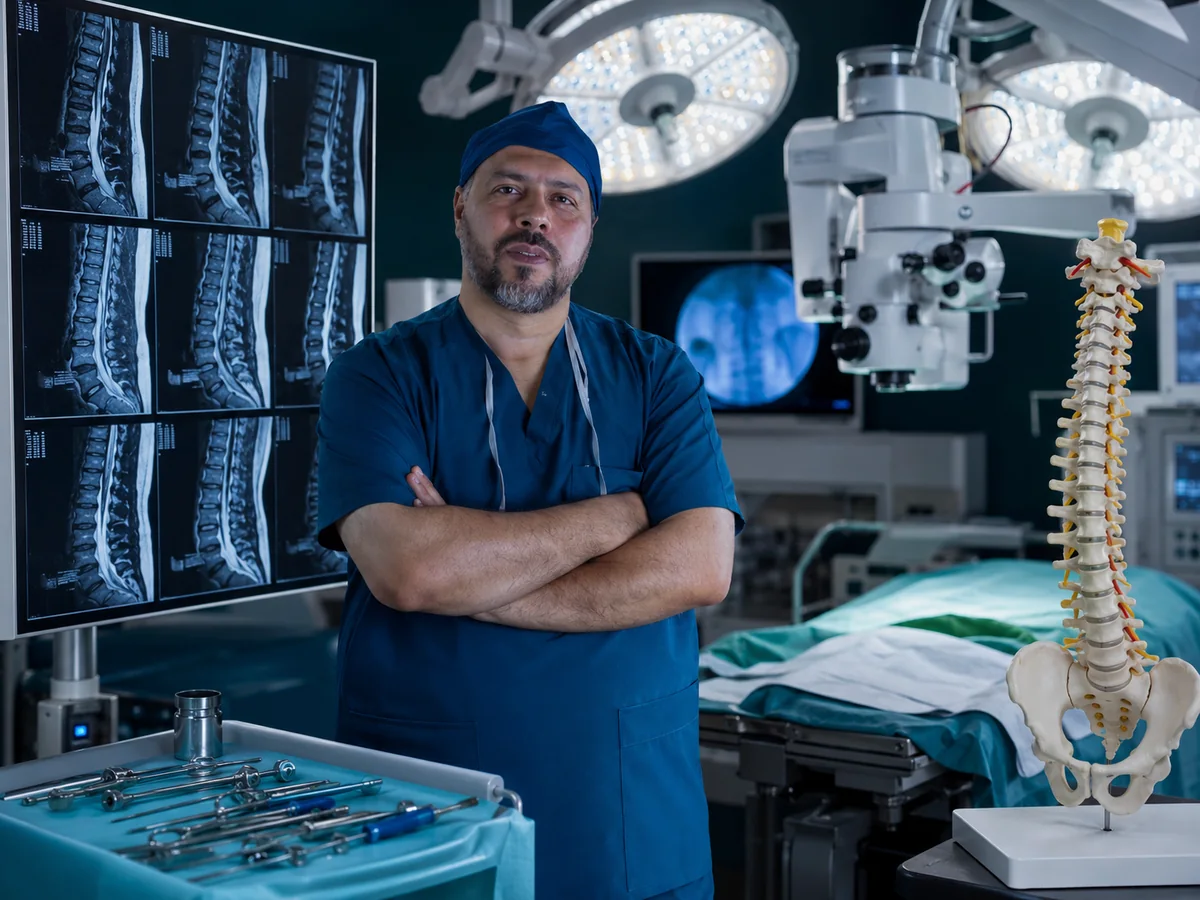
Sciatica treatment starts with a simple question: what is pressing on or irritating the nerve? Pain that begins in the lower back or buttock and travels down the back of the thigh to the leg and foot, with numbness or an electric feeling, is what people call sciatica. The cause may be a disc, a narrowed spinal canal or a muscle in the pelvis, and each needs a different treatment.
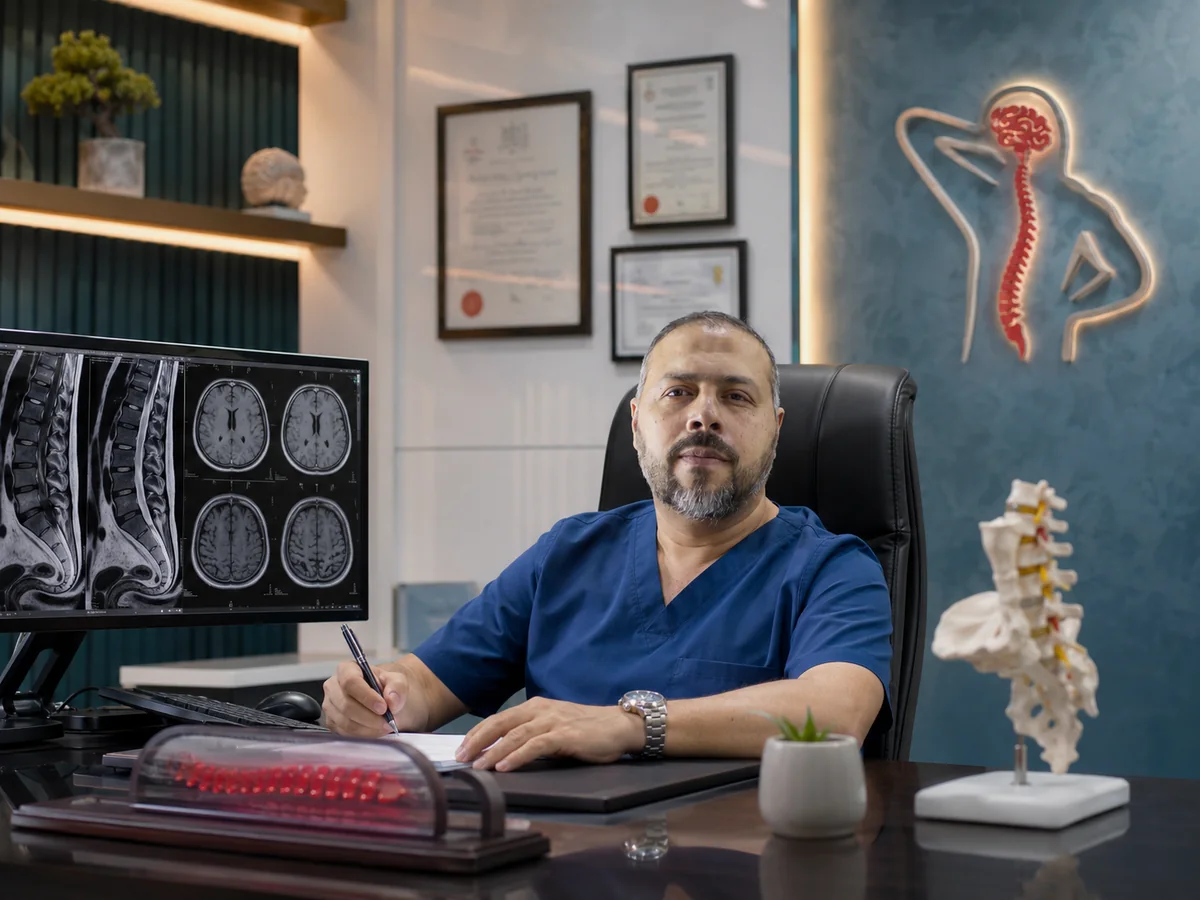
At Prof. Mohamed El-Gaidi's clinic in Dokki, the source is identified first through examination, imaging and sometimes a diagnostic injection. Then treatment is aimed at that source, sparing you months of painkillers that never address the cause.
What is sciatica?
The sciatic nerve is the longest nerve in the body. It forms from nerve roots leaving the lower lumbar spine and sacrum, passes through the pelvis beneath the piriformis muscle, and runs down the back of the thigh to the foot. Pressure or inflammation anywhere along this path causes pain along its length.
So sciatica describes symptoms rather than a final diagnosis. The pain may start suddenly after lifting or twisting, or creep in over months. Acute sciatica usually settles within weeks, while chronic sciatica lasting more than three months usually needs targeted treatment because medication alone is no longer enough.
Causes of sciatica
Lumbar disc herniation
The most common cause, especially between 30 and 50. Pain worsens with sitting, coughing and bending. See herniated disc treatment.
Spinal stenosis
More common after 50. Leg heaviness and pain come on with walking or standing and ease with sitting or leaning forward.
Spondylolisthesis
A slipped vertebra narrows the nerve exit, and pain increases with prolonged standing and movement.
Piriformis syndrome
A tight deep buttock muscle compresses the sciatic nerve as it passes, making sitting on hard seats painful.
Sacroiliac joint
Inflammation of the joint between the sacrum and pelvis causes buttock pain that may spread to the thigh and mimic sciatica.
Sciatica look-alikes
Hip arthritis, diabetic peripheral neuropathy and poor leg circulation. These are ruled out in the consultation.
Sciatica symptoms
- Pain usually in one leg, starting in the lower back or buttock and running down the back or side of the thigh.
- Leg pain often worse than the back pain itself.
- Burning, electric or pins-and-needles sensations, and numbness in the leg or foot.
- Pain worse with long sitting, coughing, sneezing or standing up.
- Weakness lifting the foot or standing on tiptoe in more severe cases.
True sciatica follows a clear line down the leg and usually passes below the knee. Pain that stays in the lower back or spreads across the buttocks without going below the knee may come from the facet joints or muscles, which changes the treatment plan entirely.
How the doctor pinpoints the source of sciatica
You will be asked details that seem small but separate the causes: is it worse sitting or walking? Does leaning forward help? Does pressing on the buttock hurt? Then comes the neurological examination and imaging:
| Possible cause | Clue in the history or exam | What confirms it |
|---|---|---|
| Lumbar disc | Worse sitting and coughing; painful straight-leg raise | MRI with a level matching the symptoms |
| Spinal stenosis | Heavy legs after a walking distance; relief sitting or bending forward | MRI, sometimes dynamic X-rays |
| Spondylolisthesis | Pain worse standing and moving | Plain and dynamic X-rays with MRI |
| Piriformis | Tender buttock, painful sitting, normal lumbar MRI | Response to a guided piriformis injection |
| Sacroiliac joint | Pain over the joint; positive pelvic provocation tests | Response to a diagnostic joint injection |
A nerve conduction study may be requested if peripheral neuropathy is suspected. A diagnostic injection of local anaesthetic is a useful tool: if the pain disappears temporarily after a specific point is injected, that point is likely the source.
Sciatica treatment without surgery
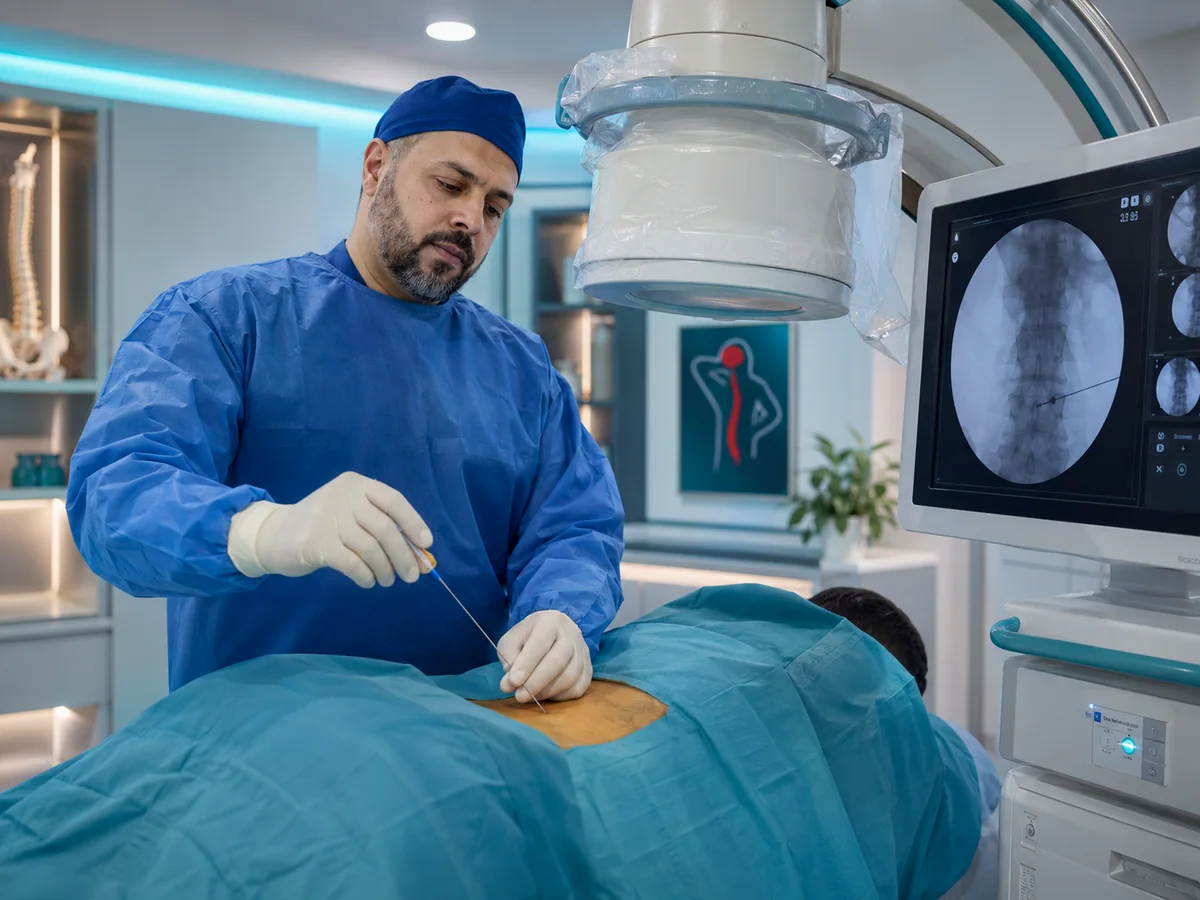
Most patients start with anti-inflammatory and nerve pain medication plus physiotherapy. If that is not enough, image-guided procedures follow, all part of pain management without surgery:
Epidural & nerve root injections
Anti-inflammatory medication placed around the inflamed root, helpful for sciatica from a disc or stenosis.
Pulsed radiofrequency for sciatica
Electrical pulses directed at the nerve root calm pain signalling without damaging it. See radiofrequency ablation.
Piriformis injection
A guided injection into the tight muscle releases pressure on the sciatic nerve, followed by a stretching programme.
SI joint & Racz catheter
Sacroiliac joint injection or radiofrequency, and the Racz catheter to dissolve adhesions around the nerve after previous surgery.
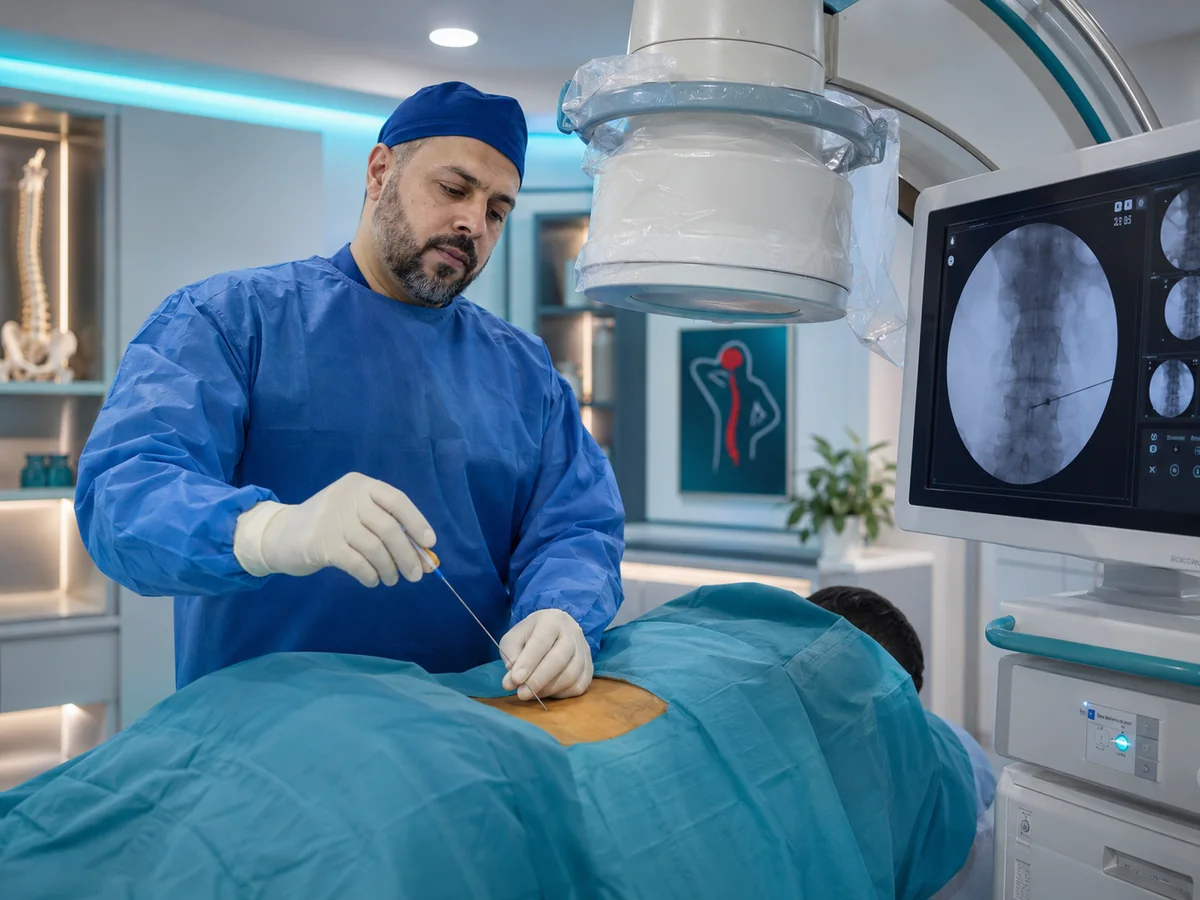
The order follows the cause: a recent disc usually starts with an epidural, piriformis syndrome with a muscle injection and stretching, and sacroiliac pain with a diagnostic joint block. Pulsed radiofrequency usually comes in when pain improves with injections and then returns, or when surgery is not appropriate. It is done under local anaesthetic; a test stimulation confirms the needle position before the pulses are applied, and most patients go home the same day.
Sciatica after previous back surgery
Some patients develop leg pain again months or years after disc surgery. The cause may be a recurrent disc at the same level, a disc at a neighbouring level, scar tissue around the nerve root or new stenosis. A contrast MRI is usually needed to tell disc from scar. Adhesions may respond to the Racz catheter; a recurrent disc, stenosis or instability may need revision surgery.
When does sciatica need surgery?
worsening foot weakness, severe pain not responding after 6 to 12 weeks of treatment and injections, stenosis that clearly limits walking, unstable spondylolisthesis, or signs of cauda equina syndrome.
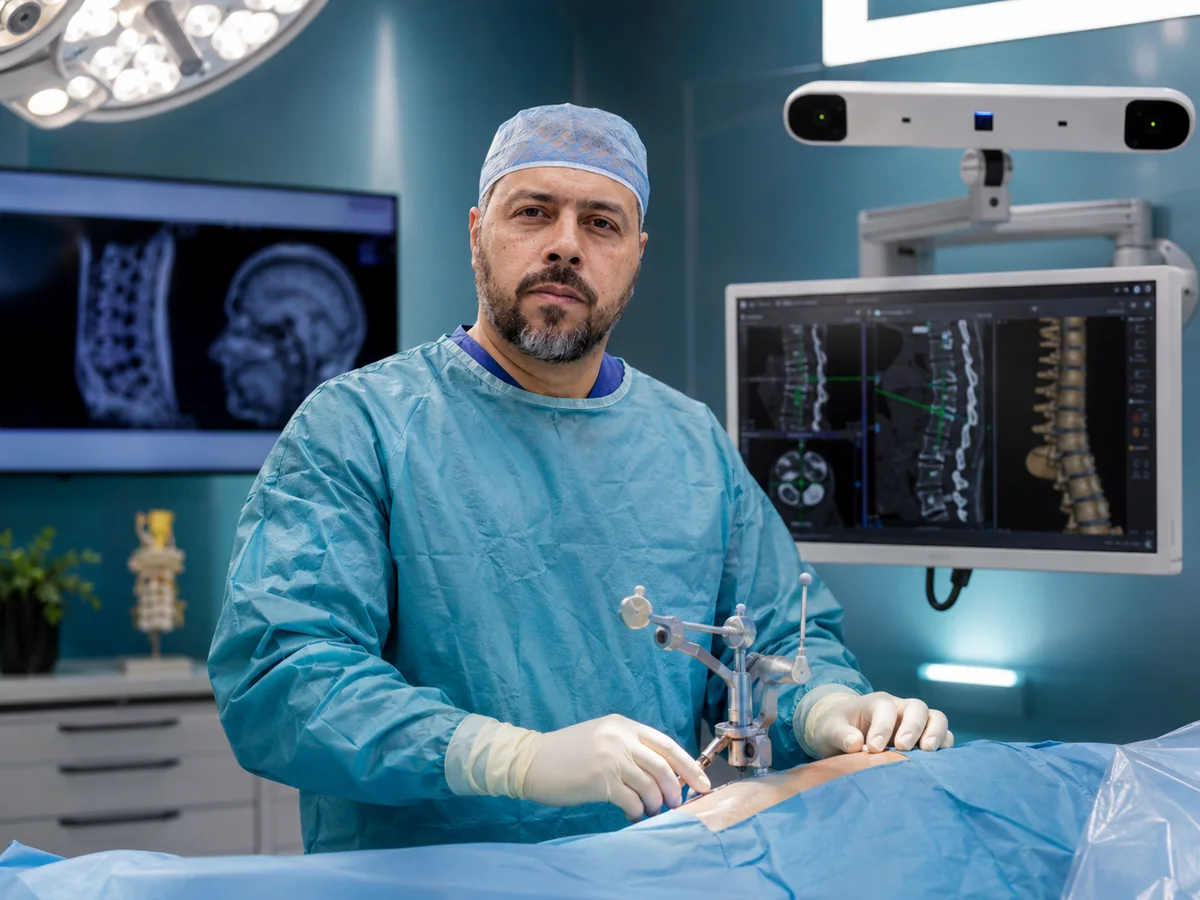
The operation depends on the cause: endoscopic disc surgery for a lumbar disc, decompression of the canal or nerve exit for stenosis, and fusion for spondylolisthesis. These are compared on the spine surgery page.
Helpful habits at home during treatment
- Keep taking short, light walks through the day rather than staying in bed.
- Break up long sitting; stand and move every 30 to 45 minutes.
- When lifting from the floor, bend your knees and keep the object close.
- Warm or cold packs may ease pain for a while.
- Gentle stretching helps, but start with what your doctor or physiotherapist recommends.
- Don't combine painkillers without advice, especially with kidney or stomach problems.

When is sciatica a worry?
Go to the emergency department immediately if you lose bladder or bowel control, feel numbness around the anus and genitals, or develop rapid weakness in one or both legs.
Book a prompt consultation if the pain comes with fever or unexplained weight loss, started after a fall or accident, you have a history of cancer, or it has lasted more than 6 weeks without improvement.
Sciatica treatment with Prof. Mohamed El-Gaidi in Dokki

Because Prof. El-Gaidi practises both minimally invasive pain management and spine surgery, your sciatica plan can move from injections to radiofrequency to surgery if needed, without starting over with another doctor.
The Spine Health & Neurosurgery Center is at 114 El-Tahrir St., Dokki, Giza, next to Dokki Metro, open daily for patients from Cairo, Giza and abroad. Call or WhatsApp +20 102 618 6600.