Herniated disc treatment works when it starts with one question: is this disc really the cause of your pain? If your MRI shows a disc herniation in the lower back or neck, and the pain runs into your leg or arm along the path of the compressed nerve, your options range from medication and physiotherapy to endoscopic disc surgery for those who need it.
The good news is that most disc patients improve without surgery. At Prof. Mohamed El-Gaidi's clinic in Dokki, the plan is built on the neurological examination and the MRI together, then stepped up from the simplest option according to how you respond.
What is a herniated (slipped) disc?
Between each pair of vertebrae sits a flexible disc that acts as a cushion, with a tough outer ring and a gel-like centre. With age or repeated strain the ring weakens and part of the centre pushes out, pressing on and inflaming the neighbouring nerve root.
Lumbar herniations most often occur at L4–L5 or L5–S1, and cervical herniations at C5–C6 or C6–C7. Common risk factors include ages 30 to 50, excess weight, smoking, heavy lifting and long hours of sitting or driving. A disc can also appear on MRI in people with no pain at all, which is why the scan is never treated on its own.
Herniated disc symptoms by level
Each nerve root supplies a specific strip of skin and particular muscles, so the pattern of pain and numbness points to the responsible level before the scan is even opened:
| Disc level | Pain and numbness | Possible weakness |
|---|---|---|
| L3–L4 | Front of the thigh and inner shin | Knee straightening; reduced knee reflex |
| L4–L5 | Side of the leg and top of the foot to the big toe | Lifting the foot or big toe |
| L5–S1 | Back of the thigh and calf to the sole and outer foot | Standing on tiptoe |
| C5–C6 | Shoulder and outer arm to the thumb and index finger | Bending the elbow |
| C6–C7 | Back of the arm to the middle finger | Straightening the elbow |
Lumbar disc pain typically worsens with prolonged sitting, coughing, sneezing and bending, which helps distinguish it from other causes of leg pain covered on the sciatica treatment page. A cervical disc causes neck and shoulder pain with finger numbness and can be confused with carpal tunnel syndrome.
Diagnosis: examination first, then MRI
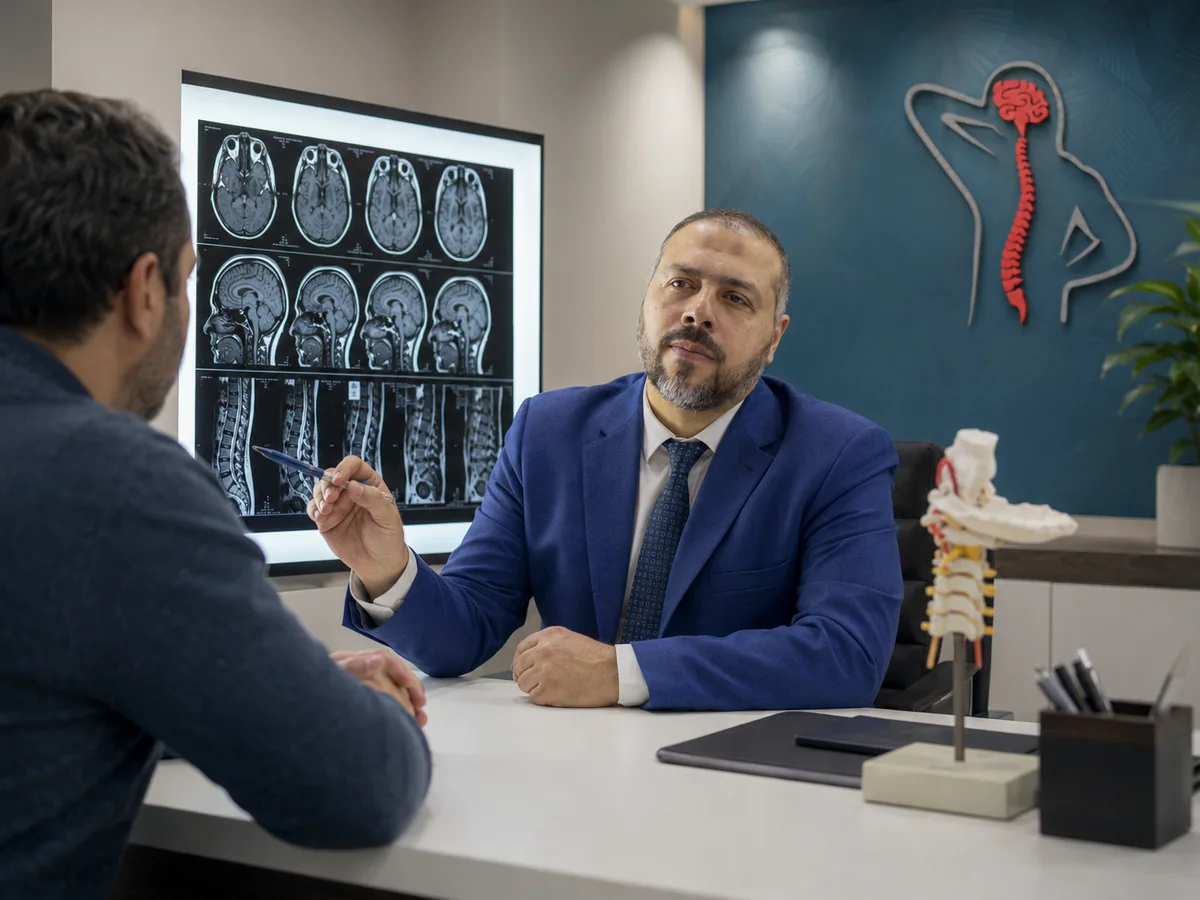
You will be asked when the pain began, where it travels and which positions worsen it. The straight-leg raise, muscle strength in the foot or hand, sensation and reflexes are then tested to identify the affected root. The MRI images are reviewed directly to match the disc level with the examination.
MRI reports use terms that often worry patients. A "bulge" is a mild, very common extension of the disc beyond its margin that often causes no symptoms. A "herniation" or "extrusion" means centre material has escaped through a tear in the ring and usually compresses the nerve. A "sequestered fragment" has separated from the disc; it may be reabsorbed or need removal if pressure is severe.
Non-surgical disc treatment, step by step
Most disc patients improve within 6 to 12 weeks as the nerve inflammation settles and part of the fragment is reabsorbed. Treatment during that time aims to control pain and keep you moving:
Medication & safe movement
Anti-inflammatories, muscle relaxants and nerve pain medication, with light walking instead of bed rest.
Physiotherapy
Back, core or neck strengthening and correction of sitting and lifting habits.
Epidural injection
Image-guided injection around the inflamed lumbar or cervical nerve root for severe pain.
Pulsed radiofrequency
Applied to the nerve root for persistent pain without damaging it. See radiofrequency ablation.
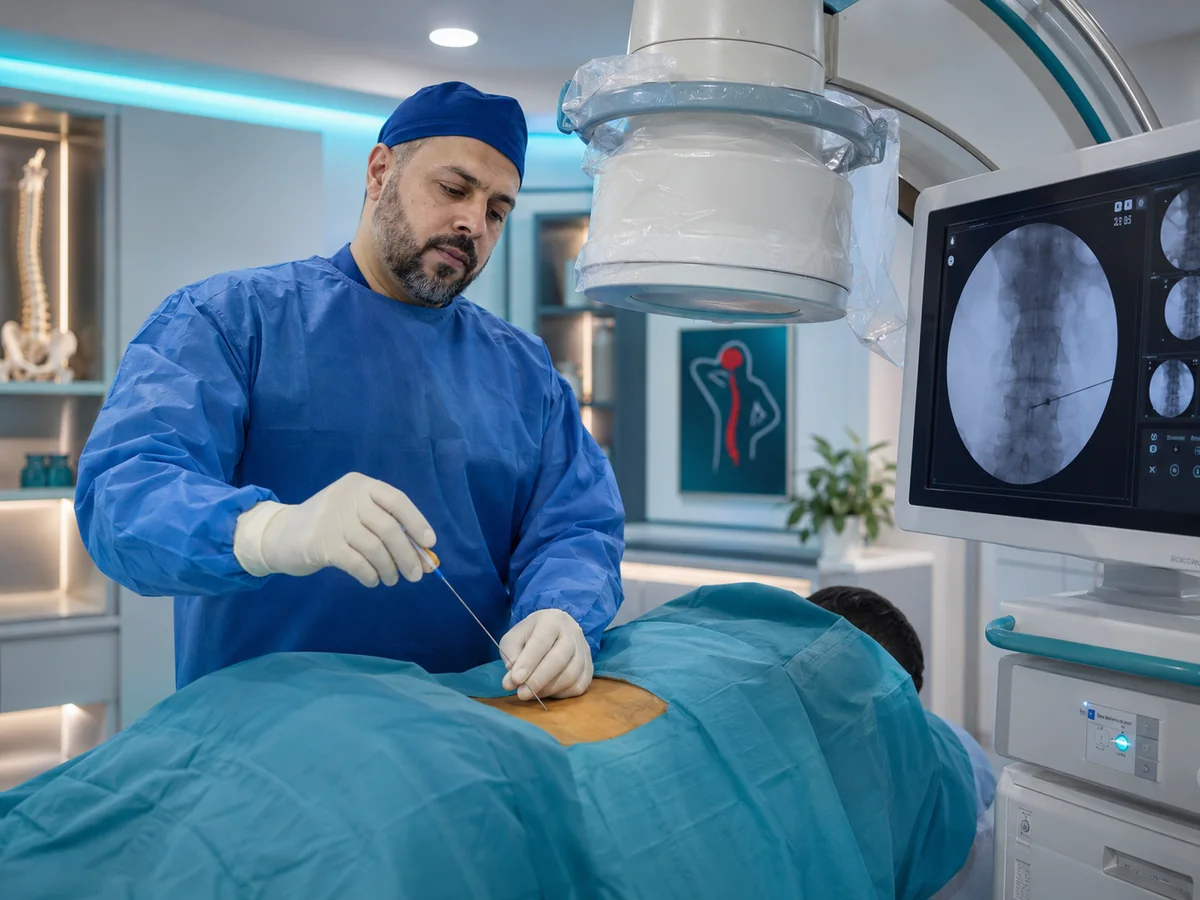
During an epidural you lie face down, the skin is numbed, and a fine needle is guided under imaging to the space around the inflamed root. It takes minutes and you go home the same day. Guided injections are part of pain management without surgery.
Disc surgery: endoscopic and other options
Worsening weakness in the foot or hand; severe pain matching the MRI that has not improved after 6 to 12 weeks of proper treatment; pain that stops you working or sleeping despite injections; or signs of spinal cord compression in the neck.
Endoscopic lumbar discectomy
A thin endoscope passes through a small opening and only the compressing fragment is removed, preserving the rest of the disc and muscles. Most patients walk the same day.
Transforaminal endoscopy
The endoscope reaches the disc through the natural opening where the nerve exits, which is particularly suited to lateral herniations at the nerve exit.
Microscopic surgery
For large discs or discs with canal narrowing, through a small incision under microscope magnification. For a full comparison with fusion, see spine surgery.
Cervical disc: fusion or artificial disc
A neck disc is usually removed from the front, followed by fusion of the two vertebrae or, in suitable cases, an artificial cervical disc that preserves motion.
Comparing herniated disc treatments
| Option | Usually suits | What it treats | Back to activity |
|---|---|---|---|
| Medication & physiotherapy | Most cases in the first weeks | Inflammation and muscle spasm | During treatment, with modified effort |
| Epidural injection | Severe leg or arm pain without progressive weakness | Nerve root inflammation | Usually the next day |
| Pulsed radiofrequency | Persistent radicular pain after injections | Pain signalling in the nerve root | Usually within a day or two |
| Endoscopic discectomy | Single lumbar disc with weakness or unresponsive pain | Mechanical compression of the nerve | Desk work often in 2 to 4 weeks |
| Artificial cervical disc | Selected cervical disc cases | Compression, while keeping motion | Usually within a few weeks |
Recovery after disc surgery
Leg or arm pain usually eases right after surgery once the nerve is freed. Numbness and weakness improve gradually over weeks or months, depending on how severe and long-standing the compression was.
- Walk early and daily from the day of surgery.
- Avoid heavy lifting and repeated bending in the first weeks.
- Break up long periods of sitting with short walks.
- Start strengthening exercises when your surgeon advises.
- Lose excess weight and stop smoking to lower the risk of recurrence.
Short drives are often possible about two weeks after endoscopic surgery, once you can turn and brake without pain. Contact sports and heavy gym lifting wait until your surgeon clears them.

Red flags: cauda equina syndrome
Rarely, a large lumbar disc compresses the bundle of nerves at the bottom of the canal (the cauda equina). This needs urgent surgery to protect bladder, bowel and leg function.
Go to the emergency department immediately for urinary retention or incontinence, loss of bowel control, numbness around the anus, genitals and inner thighs, or rapidly worsening leg weakness. With a cervical disc: difficulty walking or balancing, or worsening hand weakness.
Herniated disc care with Prof. Mohamed El-Gaidi
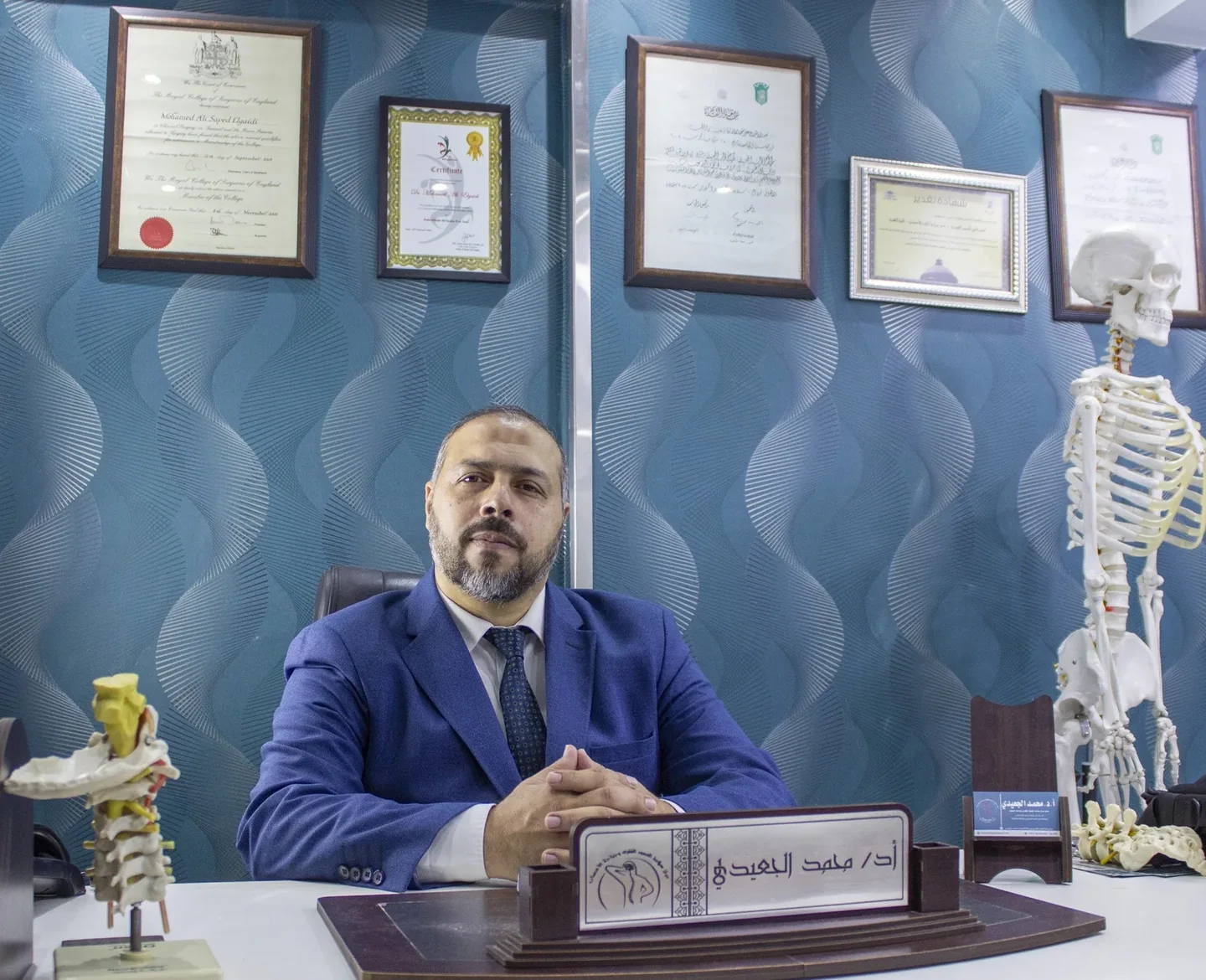
Because Prof. El-Gaidi is a spine surgeon who also performs minimally invasive pain procedures, every option is on the table: injections, radiofrequency, endoscopy and microscopic surgery. The plan is shaped by your case, not by the tool available.
The clinic is at 114 El-Tahrir St., Dokki, Giza, next to Dokki Metro, easy to reach from Mohandessin, Zamalek and central Cairo. Bring the MRI itself and any previous reports.