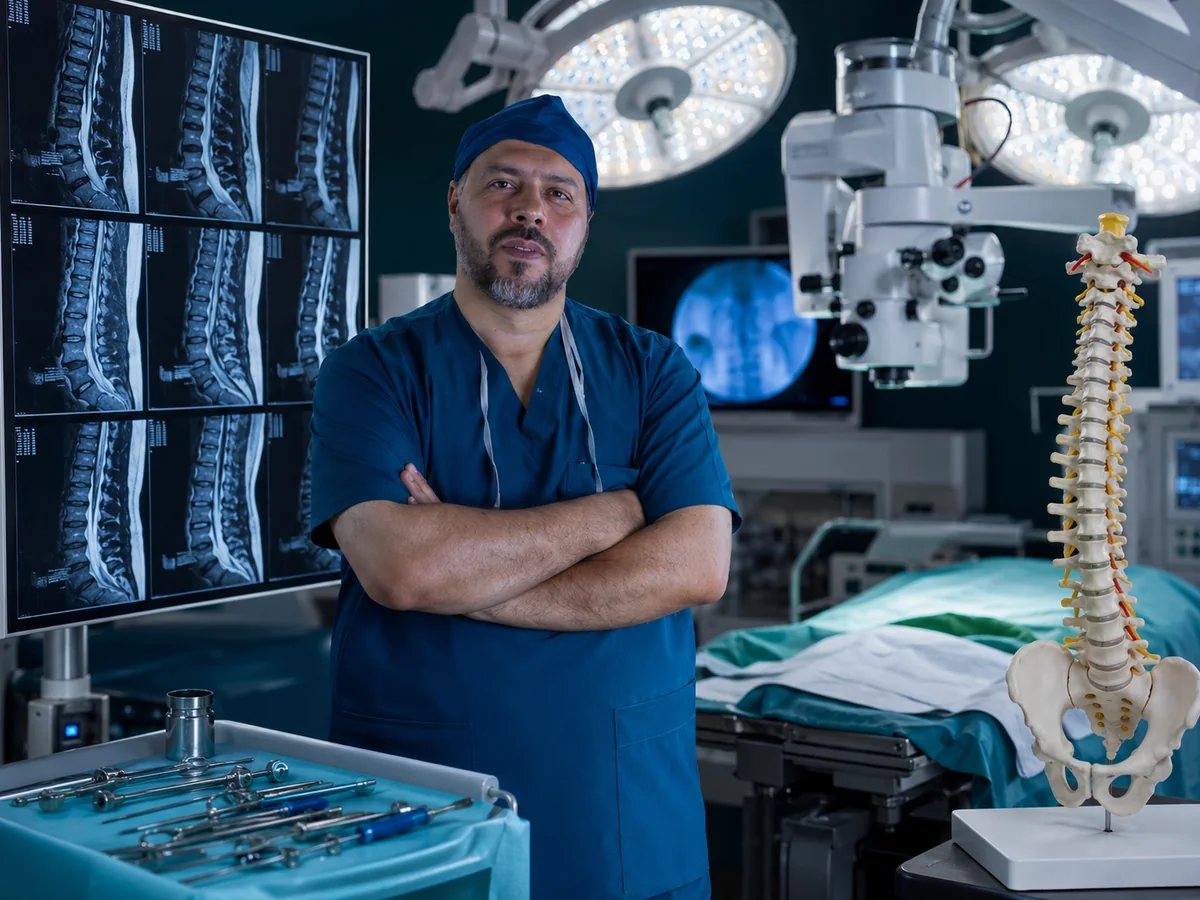
Spine surgery treats conditions in which a disc or bone presses on the nerves, or the vertebrae lose their stability or alignment, when medication and injections are no longer enough. If you are looking for a spine surgeon in Cairo because your pain has spread into your leg or arm, or your MRI report mentions "stenosis" or "spondylolisthesis", this page covers what you need to know before deciding.
Prof. Mohamed El-Gaidi is a Professor of Neurosurgery and Spine Surgery who treats cervical, thoracic and lumbar spine conditions at his clinic in Dokki, Giza. His first rule is simple: an operation is done to fix a problem that explains your symptoms, not because a scan shows a change that many people have without any pain.
When should you see a spine surgeon?
Ordinary back pain after exertion usually settles within days or a few weeks. The following symptoms suggest that nerves may be involved and that you need a specialist assessment:
- Pain travelling from the lower back into the thigh and leg, or from the neck into the shoulder and arm.
- Numbness or weakness in the foot or hand, such as difficulty standing on tiptoe or dropping objects.
- Heavy, tired legs after a short walk, easing when you sit or lean forward.
- A visible curve in the back or uneven shoulders in a child or teenager.
- Back pain after a fall or accident, or with fever or unexplained weight loss.
Spine conditions that may need surgery
Herniated disc
Part of a disc pushes out and compresses a nerve root in the neck or lower back. Most improve without surgery; see herniated disc treatment.
Spinal stenosis
The nerve canal narrows from joint arthritis and thickened ligaments, typically causing leg pain and heaviness on walking.
Spondylolisthesis & instability
One vertebra slips forward over another, narrowing the nerve exit and increasing pain with movement and standing.
Scoliosis & kyphosis
A sideways or forward curve in teenagers or adults, corrected surgically when it progresses or causes pain or compression.
Spinal fractures
After accidents or with osteoporosis. Fixation is needed when the fracture is unstable or compresses the spinal cord.
Spinal tumors
Tumors in the vertebrae or around the spinal cord and nerves, removed to relieve pressure and obtain a tissue diagnosis.
Spinal infections
Most are treated with antibiotics; surgery is needed for an abscess, compression or bone destruction.
Revision surgery
For patients whose pain returned after a previous operation because of recurrent disc, hardware problems or an adjacent level.
When is spine surgery necessary?
Most patients with disc problems and back pain improve with medication and physiotherapy, or with guided injections as part of pain management without surgery. Surgery moves to the front in specific situations:
Worsening weakness in the foot or hand; severe pain matching clear nerve compression that has not improved after 6 to 12 weeks of proper treatment; stenosis that limits your walking; instability, a fracture or advanced deformity; or a tumor or infection pressing on the nerves.
Spinal stenosis is a good example. Many older adults show some narrowing on MRI, but surgery is only offered when walking distance shrinks enough to affect daily life, or leg weakness appears. A disc on an MRI report without matching symptoms is not a reason to operate.
Endoscopic vs microscopic spine surgery vs fusion
| Feature | Endoscopic surgery | Microscopic surgery | Spinal fusion |
|---|---|---|---|
| Suitable for | Single lumbar disc; compression at the nerve exit (foramen) | Large or multiple discs; spinal stenosis | Spondylolisthesis, instability, fractures, scoliosis and kyphosis |
| Incision | Roughly one centimetre | A few centimetres | Depends on the levels; percutaneous in selected cases |
| What is done | Only the compressing fragment is removed | Disc removal or canal decompression while preserving stability | Two or more vertebrae joined with screws and rods until they fuse |
| Hospital stay | Usually one day | Usually one to two days | Usually several days |
| Back to desk work | Often within 2 to 4 weeks | Often within 4 to 6 weeks | After several weeks; full fusion takes months |
Endoscopic disc surgery
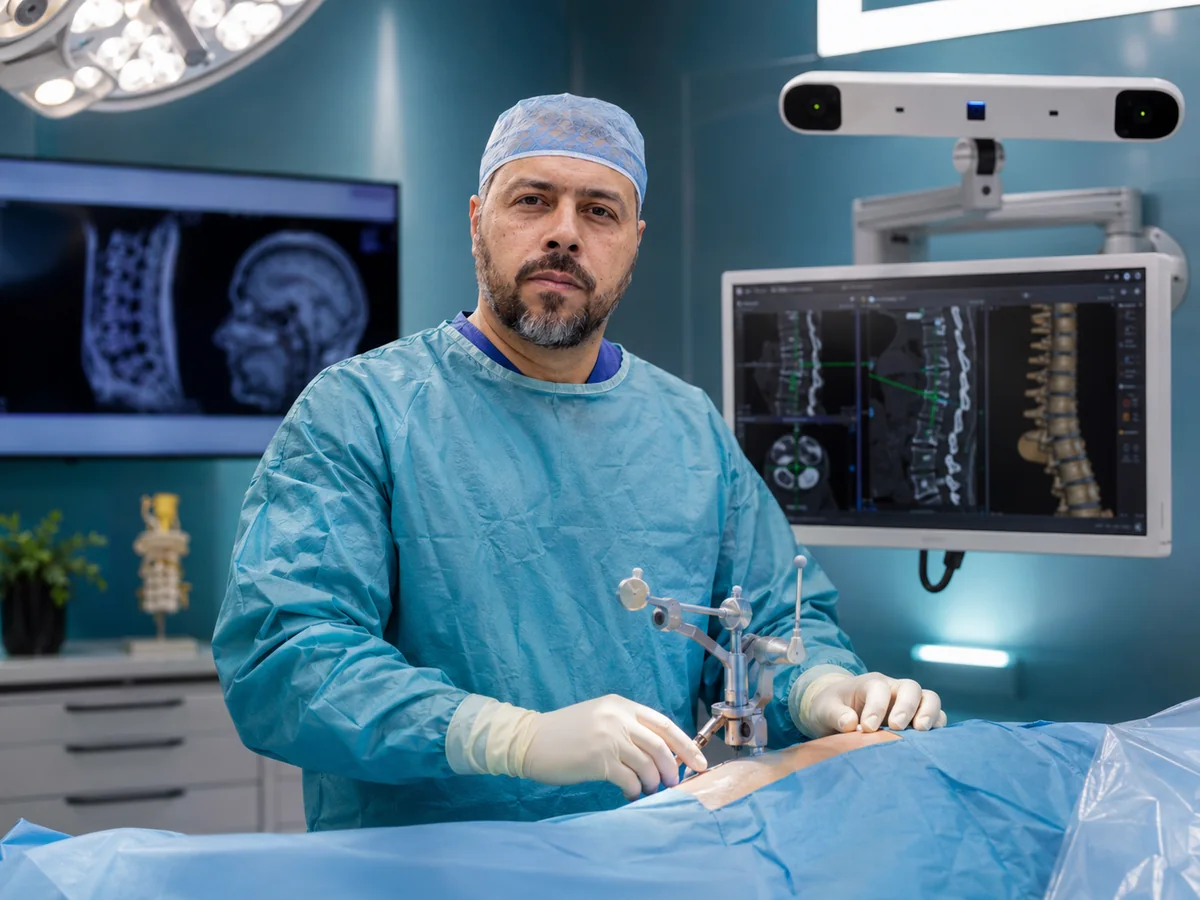
This includes endoscopic lumbar discectomy and transforaminal endoscopy, which reaches the disc from the side of the vertebra with minimal bone removal. It suits lumbar disc patients without instability, and most walk on the day of surgery.
Decompression of the canal and nerve exit
Bony overgrowth and thickened ligaments pressing on the nerves are removed. This is the main surgical treatment for stenosis in older adults, aiming to restore longer walking distances.
Lumbar, thoracic and cervical fusion
Used for instability, spondylolisthesis, fractures and deformity, including percutaneous fixation for selected cases and C1–C2 fixation after injury or instability.
Artificial cervical disc
In selected cervical disc cases, the damaged disc can be replaced with an artificial one that preserves neck movement instead of fusing the two vertebrae.
Neck (cervical spine) surgery
The spinal cord runs through the neck before branching into the nerves of the arms and legs. A cervical disc or severe canal narrowing may press on one nerve root, causing arm pain and finger numbness, or on the spinal cord itself, causing wider symptoms.
Watch for clumsiness with fine hand tasks such as buttoning or writing, unsteady walking, or numbness in both hands. These usually mean spinal cord compression, which is most often treated surgically to protect the cord from permanent damage. Options include anterior disc removal with fusion, an artificial disc in suitable cases, or posterior decompression when several levels are involved.
Scoliosis and kyphosis correction
Scoliosis usually appears in adolescence and is followed with full-spine X-rays to measure the curve and how fast it progresses. Mild curves are observed or braced during growth; large or progressing curves are corrected surgically by fixing and realigning the vertebrae.
This field has a special place in Prof. El-Gaidi's career: his doctoral thesis at Cairo University was on three-dimensional correction of scoliosis in adolescents. The same assessment applies to kyphosis and adult degenerative deformity.
Before surgery: consultation and preparation
Imaging
MRI, with dynamic X-rays for stability or CT for bone detail when needed.
General tests
Blood tests, heart and diabetes assessment, and bone density before fusion.
Medication review
Blood thinners are adjusted only on the doctor's instructions; stopping smoking is advised.
Aftercare plan
When you will walk and go home, physiotherapy, and follow-up visits and scans.
If you have been advised to have spine surgery and want a second opinion, bring your full MRI and reports. You will leave with clear answers: is surgery needed now, what are the alternatives, and what is the smallest operation that achieves the goal.
Recovery after spine surgery
Most patients walk on the day of surgery or the next day, because early movement reduces stiffness and clots. Leg or arm pain usually eases quickly once the pressure is removed, while numbness and weakness recover more slowly over weeks or months.
In the first weeks, avoid heavy lifting, repeated bending and long uninterrupted sitting. Physiotherapy and core strengthening start when the surgeon advises. After fusion, follow-up X-rays confirm that the bones are knitting together.
Seek urgent care for fever or wound discharge, new leg weakness, loss of bladder or bowel control, or numbness between the thighs, before or after surgery.
Spine surgery with Prof. Mohamed El-Gaidi in Dokki
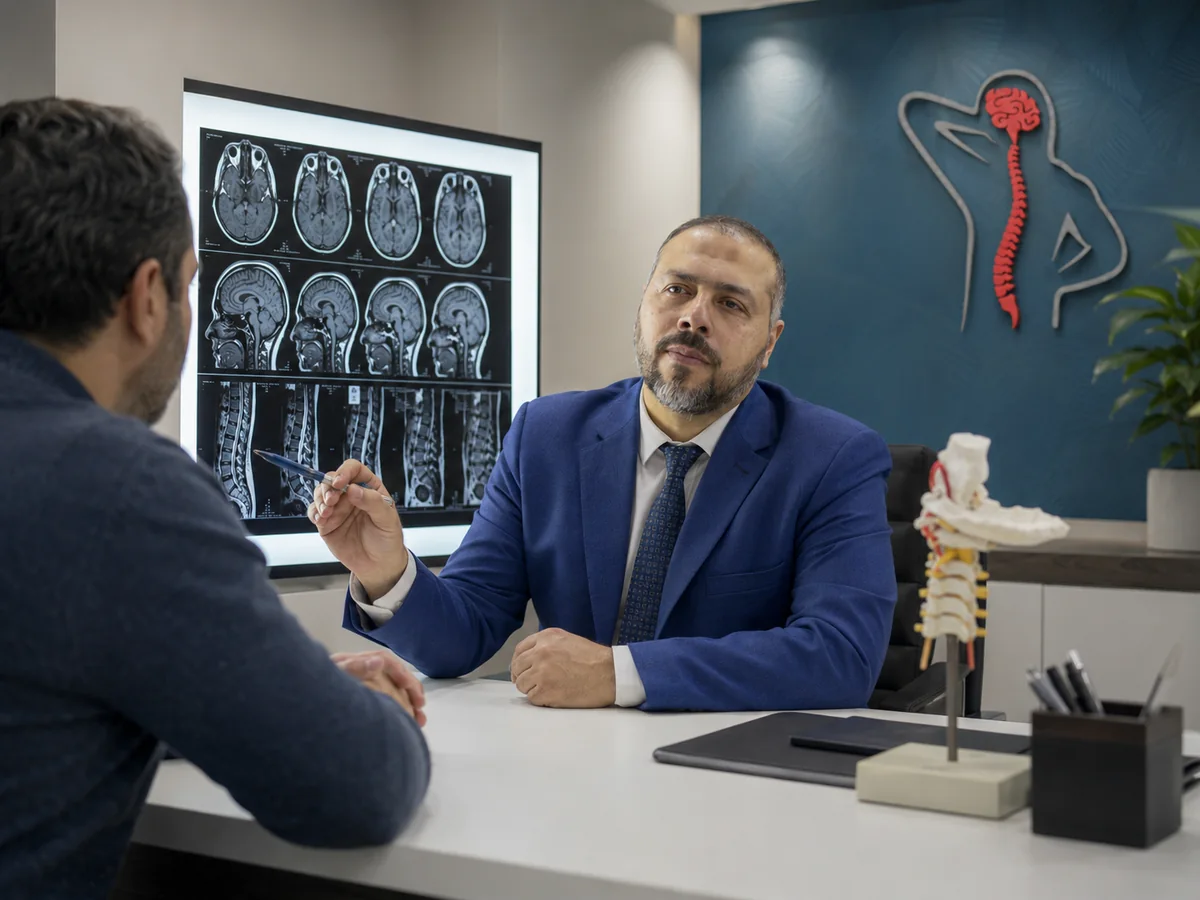
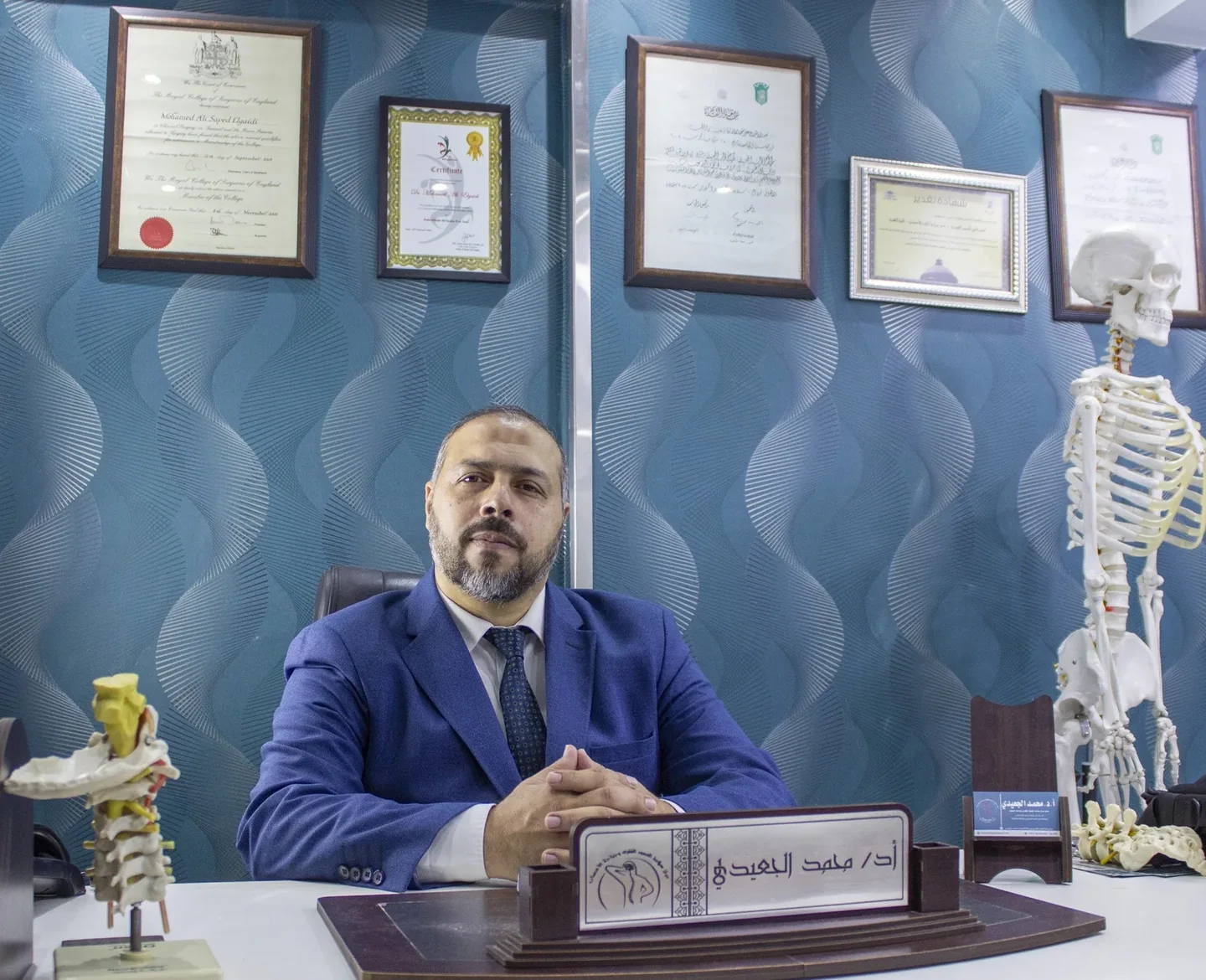
Prof. El-Gaidi practises both non-surgical pain management and spine surgery, so he can weigh guided injections, radiofrequency ablation, endoscopy and fusion for you without a predetermined answer. He graduated from Kasr Al Ainy in 2000, earned his MD in Neurosurgery in 2009 and became a full Professor in March 2023.
If your pain runs down the leg, also read about sciatica treatment. The Spine Health & Neurosurgery Center is at 114 El-Tahrir St., Dokki, Giza, next to Dokki Metro, and welcomes patients from across Cairo and from abroad.